
The Story of Snowbird (2 Parts) – Brody Holloway Interview
In this special episode of NSR, the tables are turned as Brody is interviewed about the early days of Snowbird. Listen as they discuss the vision and heart behind SWO.
- Be Strong: Snowbird Men’s Conference
- Snowbird Marriage Conference
- Snowbird College Retreat
- Nothing Can Eclipse your Call to Christ (NSR episode about Brody’s dad)
- Email Brody – brody@swoutfitters.com
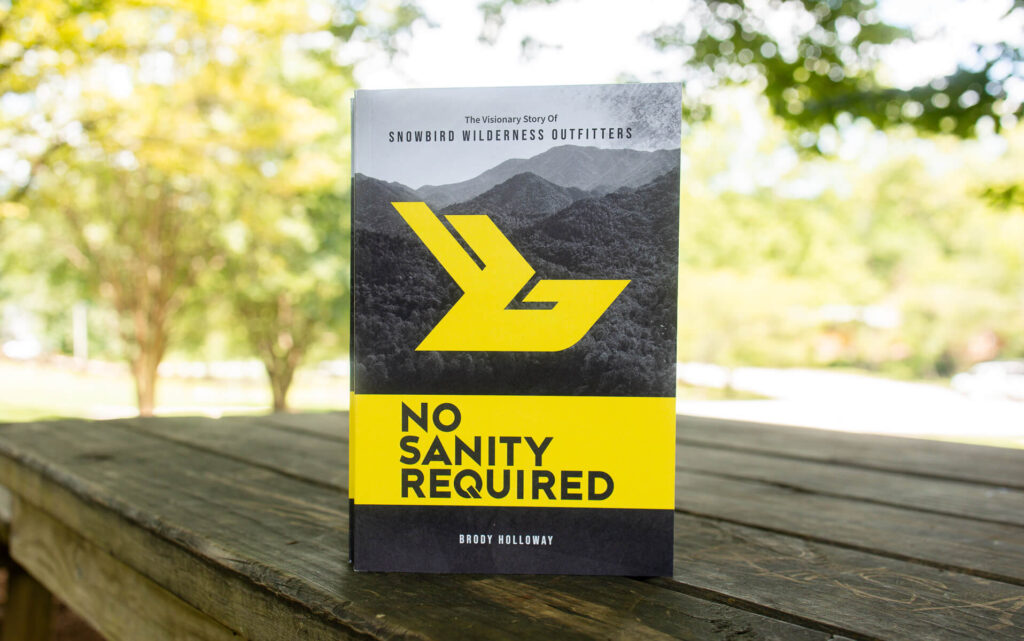
‘No Sanity Required’
The Visionary Story of Snowbird Wilderness Outfitters
No Sanity Required is more than a tagline. You’ll get to read Brody’s personal stories of SWO’s earliest beginnings, along with a glimpse into what’s coming up.
Transcript – The Story Of Snowbird (Part 1)
Brody
Hey, this is going to be a way different episode. Jon Rouleau came up to me last Friday and said, hey, I want to sit down and interview you, but I want to do it as an NSR episode and I loved the idea, he said, I think there’s a lot of questions that I could ask you that folks would be interested in hearing and so, anyway, it was kind of, a different approach to NSR and what this week’s episode will look like. We spent a lot of time together. I enjoyed the conversation so much. Jon’s such a good personal friend, but he knows so much of the history of SWO he’s been here for a lot of it, so I think he did a great job as an interviewer. I hope that I gave him what he was looking for and I hope it’s something that you guys can gain something out of a lot of the highs and lows and just the storyline of SWO over the last quarter century and more, actually, more than that, I had a blast doing this episode. It’s long, it’s a lot of content and I hope you don’t get bored with it. I hope you actually find it interesting. I believe you will, but I think this falls in line just a Little bit of everything, Little bit of tailgate theology, Little bit of beyond the flannel graph, Little bit of a whole lot of no sanity story and this is it. This is a lot of the story of Snowbird wilderness Outfitters and no sanity required. So, get comfortable, this is a long one and I hope you get something out of it, let us know what you think we’ll see at the end of the episode,
Welcome to no sanity required from the Ministry of Snowbird Wilderness Outfitters, a podcast about the Bible culture and stories from around the globe.
Jon
All right, well, hey, welcome to the No Sanity Podcast. No Sanity Required Podcast, I’m going to be your host today. Jon, something a Little different and man, I had this idea. I was talking to my wife about it and I was like, I get a chance to sit at the fires at camp and just hear stories about, early days of Snowbird, or stuff that happened in our life, or when God, transformed this person and it’s just really special and I thought, Brody does all of these, he interviews other people, brings different guests on, but I know the listeners like me, I would love just to interview Brody and ask him about his life and Snowbird and that kind of, thing. So, I pitched the idea and I was, I literally went up to him and I said, hey, I said, hey, Brody I said, I have this idea, let me, maybe in the future, if you ever, need an episode. I said, what if I just interviewed you and asked you some questions and he’s like, let’s do it right now and I was like, I said, hold on, can I can I get a day to think about it? I was like, I didn’t even think about a question, you know what but he’s like, hey, I just want to do it right now and I was like, so that’s,
Brody
That’s, you know me, that’s just how I am. that’s a blessing and a curse. That’s the way I’m wired
Jon
Yeah. So, I was like, okay. So, I was like, well, I better get some questions. So, just so everybody knows, I have a few questions in my mind. We haven’t talked about anything. I’m just; I’m going to kind of, rapid fire and just see where this goes.
Brody
See where this goes and if people have questions, they’d like to for me to answer, for us to talk about, we do another episode, email us some questions, email them to Jon email them to me.
Jon
Yeah, that’d be awesome; it’s Jonr@swoutfitters, but yeah, so I kind of, wanted to start off because we’ve grown up completely different. I grew up in Southern California and moved here to Andrews, you’ve grown up in the mountains and I love to hear those stories, because it’s just so different and so, can you maybe, let’s just start off. I’d love to hear about, a Little bit about your childhood, how you grew up in the mountains, you talk about your brothers and you guys fighting and your dad was in ministry and just so many of those aspects. So, can you just maybe just share a Little bit, what does that look like growing up in the mountains?
Brody
Yeah, I can hit some, high points. So, my mom’s side of the family goes back to, six generations, maybe in the mountains of North Carolina and so, I got a long, deep mountain pedigree. This, it’s a unique culture. Southern Appalachian culture it’s not southern culture. Like Southern Appalachian culture looks more like Central and Northern Appalachian culture than it does the south. The accent is closer to a southern accent, but and I don’t really have the Appalachian accent anymore, it’s funny watching old home videos, because I did, even in the early Snowbird days, I had it, but it’s a unique culture and part of that is because it was a culture of people settled here from the Scottish Highlands, primarily and they were just kind of, wanted to be left alone and were left alone, traded with the Cherokee, lived here and so, anyway. So there’s, a lot of deep roots that are cultural, but my dad’s side of the family. My granddad came here after World War Two and met and married and my grandmother on my dad’s side of the family and he was from Mississippi, my granddad, Virgil Holloway, had grown up Mississippi, left Mississippi as an 18 year old to go in to service whatever and late 40s, early 50s, late 40s, ended up in North Carolina after World War Two, but then he never left North Carolina and so, my dad’s dad was a pastor, but he’s bi vocational.
He worked in a mill and he was a pastor, he came to faith as an adult after he got out of the military and around time my dad was born and then, yeah, I grew up on a dirt road, gravel road, just typical growing up in the 70s and 80s in a rural setting. Didn’t have TV when I was growing up and so, we just stayed outside the person had the biggest impact on me as a man would have probably been my mom’s dad, he’s a mountain guy and was a World War Two veteran and worked at a factory here in the mountains and then, my dad. There are a lot of things that I’m thankful that my dad really instilled in me, grit, toughness, hard work, those things, but my dad was a lot of people know my dad’s story, one of the first episodes on NSR. I told it he was a pastor when I was young; he was a bi vocational pastor. Went to seminary, was seminary trained and educated, but he fell into infidelity and had a series of extramarital affairs and those forced us to move several times, he was pastoring, he would get in trouble and then, we would move. I only learned that as an adult sitting down my mom.
Hey, tell me this and my dad sitting down, my dad and he’s like, hey, remember when you were in second grade, we had moved up to Boone, which is where Appalachian State University is, that’s where my dad played football on a scholarship there and he and my mom married while and I was born right away, while they were like sophomores at App State and so, we had roots there and so, when I went to second grade there and then, we left there, well, I found out. My dad told me that was because of an extramarital affair and then, came down here, back down to Haywood County, which most of our listeners aren’t going to know the geography, but a couple hours, hour and a half, moved back to Southwestern, north Carolina and my dad pastored and then, when I was in middle school, we moved I found out that was because of infidelity. So, it was a convoluted view of Christianity growing up, because my dad while he was pastoring, he was like a fundamentalist, which is super strict sect of Baptist life where you can’t listen to music with drum beat, girls supposed to wear skirts or dresses, real strict dress code and can’t go to the movies and my younger siblings didn’t have as much of an experience of this. Things started to loosen up when I was a teenager. I’m thankful for that.
But, so that was kind of, I grew up in a pretty tight, legalistic religious structure and so, that was my formative that was my growing up experience with like theology and church and so, it didn’t, it was a strange upbringing, for sure, but a home where there was I think, a lot of love, a lot of extended family, all my aunts and uncles and cousins lived in the same area. We all lived in Haywood County, which is where Waynesville, North Carolina, Maggie Valley, North Carolina and Canton North Carolina. Those are the three towns in Haywood County just west of Asheville and so, yeah. Grew up hunting fishing, I grew up on a dirt road where there were tomato farms and we would ride our bikes. We would take inner tubes and ride our bikes up. It was right on the Pigeon River. They irrigated out of the Pigeon River. We’d ride our bikes up to the bridge, couple miles up the dirt road and then, throw our tubes in the river and float the Pigeon River down to the farm below our house and we’d get out. It was the Henson brothers had it, they farm for a living, big tomato farms. We’d get out and just a fun upbringing, playing in the river, fishing, swimming, riding our bikes.
Jon
That’s awesome,
Brody
It was a very, very 70s and 80s, rural mountain upbringing. By the time I got into high school, I graduate, I went through high school in the late 80s. So, a that was just a fun era to be in high school as a cool, think, go watch Stranger Things or…
Jon
I mean, the best movies are in the 80s.
Brody
They are.
Jon
You watch the 80s and you’re like, gosh, there’s this nostalgia that you, I think everybody wishes they lived in that era.
Brody
It was a cool time to grow up and I grew up in a time where I was talking to my boys, my younger boys the other day, where I remember getting in fist fights weekly in elementary school, in middle school, it was, boys were just rough and tumble. If you got in a fight at school, you got disciplined, but you didn’t… There was no SRO; you weren’t getting kicked out of school. It’s just kind of, a different time. Boys could be boys. So, I have a younger brother, biological brother, who’s a couple years, three years younger than me and we grew up, but he’s, he’s a big dude and so, we were closer in size, he was, it looked more like we were the same age, because he was such a big kid and so, we grew up together.
Jon
His brother looks like a gladiator. PS, I Okay. Listen when, when I first moved back and it was a birthday party for you at the snack shack and your family was here and I remember rolling up thinking, who are these Neanderthals? it was just like everybody. I was like, is this like a UFC camp thing. What’s happening here?
Brody
I tell people I’m the runt of the men in my family and they don’t believe because, people are like, there’s no way, but I am, I have my cousin Scott on here not long ago, he’s retired Secret Service agent and it was fun, because he was the only one that didn’t grow up here with the rest of us, his dad and mom, his dad was from the middle part of the state, outside of Charlotte, but he’s big old boy, he’s a he’s a big dude, my family so my brother, we grew up very rough and tumble in a good way. Not rough, on the streets. Just tough kid like, got to be boys, if you got bloody or needed stitches or a bone set, it was just not a big deal and I can remember getting the first time I remember getting stitches was I was probably in second grade and I remember freaking out and my dad just saying, hey son, this is probably going to happen a lot. It’s not a big deal. We’re going to go to the doctor, they’re going to put some stitches in your head and it was and like I remember, I tell this story, I’m breaking my nose. I broke it twice and the first time, my dad took me to the doctor and the doctor reset it with these two Little probe looking things, he kind of, slid them up into my nose and he just straightened it, he just one in each nostril, he straightened it. It wasn’t like, smashed and shattered, it was just cracked and offset and he straightened it up and broke my nose again. I remember my dad saying, I can do that. We aren’t going to doctor this time and he just, pulled on my nose and so, I remember breaking a finger in football and my dad saying, ah, you don’t need to go to doctor for broken fingers. We can straighten that. We can fix that and he pulled on it and jerked on it and then, taped it to a Popsicle stick,
Jon
Technically, I don’t think that’s true, but. That’s fine.
Brody
That’s not true It’s not and it’s, it’s great because there’s enough of our listeners and enough people at Snowbird that got to know my dad, enough to know he was an interesting dude and was rough as a cob, but was a larger than life kind of, personality and but, anyway, yeah, so that was my upbringing, just we were poor. I would say by today’s dinners, we were poor. I didn’t know we were poor, but we did not have much and drove old beat up cars and again, I’m the oldest, so I have a lot of memories from childhood that other siblings probably wouldn’t quite remember as much, but we never had a lot and I’m grateful for that. My dad really made me work a lot like I’ll tell this one story and I’ll, be done with that, but when I went off to college, I was an athlete. I went to college to play basketball and so, you don’t get time off, you don’t get to go home when you’re a collegiate athlete, it’s a year round sport at that point they were going to give us thanksgiving. They said, don’t get used to this. It’s not going to happen very often, but they were going to give us thanksgiving off and so, that’s right in the middle of basketball season, but what it was, we had a tournament. You start, midnight madness in October and it’s a big tip off and you play at midnight of. The first day the NCAA let you play ball and everybody was there and it’s kind of, crazy and the stands are full.
Then, at Thanksgiving, I got to go home. We got to go home for Thanksgiving. We got to have Thursday, Friday, Saturday, off. We had to be back on Saturday evening and we had meetings on Sunday. So, they give us three days off and I remember the upperclassmen saying, this has never happened. I remember a guy named Mike Coleman, he was a senior, played center 6.11 dude and he said they’ve never given us these days off. So, my dad, he calls me. My parents were still together at this point. They got divorced after I was in college, he gave me a voucher to fly home and now I’m flying. It takes me five hours to drive. It took me eight hours to fly home because I flew out of Lynchburg to Roanoke, to Raleigh, Durham to Asheville, so funny I should’ve just drove home. So, I get home, he picks me up and this is all on Wednesday night. We had practice on Wednesday and Wednesday afternoon, a fly out. I get home at midnight. We celebrate. We do Thanksgiving. We had a lot of cool traditions. We went hunting on Thanksgiving morning always go to my papa’s house, my granddad’s house and we had a big meal. Well, Friday morning, my dad had lined up that I would work as a temp with Allied moving company and I said what? I’m exhausted, exhausted, you know what that looks like
Jon
And you got a turkey coma.
Brody
I’m in a turkey coma and have just worked my tail off my first semester of college and I got up, I had to be at Allied van company, so I don’t remember where I had to go, but at seven in the morning and I didn’t have vehicle, so he took me, drop me off. So, seven o’clock Friday morning drops me off. I get in an 18 wheeler with a guy and we drive out to Lake Lure up into this expensive home, gated community. These people had built a house and we’re moving their stuff in and I got and we unload an 18 wheeler, a semi. I remember we moved in a piano, me and this truck driver and I was working as a temp and I worked 10 hours that day and then, on Saturday, I had to work half a day. I had to fly back Saturday evening, he worked me half a day Saturday and I think I made like 80 bucks in two days and I remember just going, I’m never going to go home on break. I’m not doing it, but ended up I’m thankful for that, so I was raised to work hard and didn’t really make my fate. I don’t think I didn’t become a true Christ follower till I was 19 years old, because it was just a religious system, I would say, growing up and there was so much emphasis on the do’s and don’ts and so, anyway, that was a long answer. I just spent 15 minutes…
Jon
That wasn’t a pumpkin spice latte fall for you.
Brody
No, it was not. It definitely was not. I remember when I said we didn’t have money, we didn’t have snacks at the house and so, the snacks were, my mom would buy big tubs of peanut butter and we would eat peanut butter on just spoonfuls of peanut butter. That was the snack I would have, but then my mom, she cooked breakfast every morning. We had grits every morning, because it’s cheap, she’d make a big pot of grits every day in my life, thankful for that. With a lot of love, my mom is an awesome lady and just a lot of love, but I remember we would get to eat cereal on Saturday mornings and it would be plain rice krispies or corn flakes, but I can remember not having milk and putting water in the cereal and eating it. I remember that vividly and would still do it when I got to college, because I had done it,
Jon
Yeah man, that’s crazy. Well, I love that insight in the sense that, you’re obviously sharing, no family’s perfect, there’s obviously some brokenness that was there, but I’ve heard you say multiple times, there’s a lot of love was there and that seems that it shaped you a Little bit, but I guess the question that comes to my mind when I’m hearing you say that, with your dad and the legalism and some of the extramarital affairs, all that kind of, stuff and but, yet still have an extended family, different people. Was there somebody in your life maybe that, when you look back, was maybe a Little bit more of that, Christ, example, you know what or where, was there anybody was at a collection of things, was just things that you picked up, how did it kind of, lead you to that place when you were 19. Was there seeds planted early?
Brody
Yeah, I think, yes. So, there was, for sure, there was a lot of Scripture put into my mind, I think, I did Bible drill as a kid, where you memorize Scripture and I was there every time the church doors were open and but, I think my spiritual formation occurred. So, when I was 19, what happened was I was just like seeking truth and okay, I was wrestling with is, if I’ve been fed a lie my whole life, you come to that point where you got to make your faith your own, Scripture says the Gospel is not of the flesh. So, in other words, you’re not born a Christian. It’s nontransferable. Nobody gives it to you. You’re not born with it. It’s something that the Lord provides and so, when I was 19, I was just trying to figure out, who am, what am I going to do and so, the Lord was so kind to show me favor and I just, I think, I decided I’m going to make this my own and after that, I just committed to read the Bible. I started reading the Bible and then, the Lord put some people in my life along the way that I learned from and…
Jon
This was, was this after you had gone to college?
Brody
Yeah, I was 19. I was a sophomore in college, when I made a profession of faith, I think and I didn’t, make a profession of faith and make it a public it’s like, I don’t, this is crazy. I don’t know when I really got saved.
Jon
Was that at Liberty, were you?
Brody
Yeah and people say, how did you go to Christian school when you weren’t a… Well, I had all the answers. I knew what to say, but I was zero confidence of myself.
Jon
And you were an athlete so, there’s always exceptions.
Brody
Yeah, there’s exceptions and you had to write down, I don’t remember now, but yeah, just profess to be a Christian and I did, but and I had to go through Bible classes that first year and I’m not kidding, Jon I skipped them, didn’t go, it’s easy to dodge class and they had advisors that came and checked to make sure we were in class and as soon as the advisor came through, they were grad assistants. They were taking role to make sure athletes were in class, they were from the team and I would slide out and I’d skipped a lot of classes, but just kind of, go through the motions, but yeah, so my personal journey was that my sophomore year, I made a profession of faith and a lot of it had to do with Little because I saw her and thought, I really want to talk to her and maybe I don’t know the terminology I would have used date her or go out with. I don’t remember.
Jon
Hey now, she’s a Bible girl,
Brody
Which and she, but what was crazy is she was a brand new Christian and she wasn’t like on fire for God or anything. She was there on a scholarship to play ball. That’s how I met her. That’s how it saw her anyway, was in the vine center, in the gym, shoot around practice, but I remember this. The Lord used my desire to pursue a woman to say, I remember this self-check of, okay, how am I going to do this? I’ve never seen this done right my dad. I knew my dad’s stuff like my parent’s marriage was like Rocky and my mom was so good and gracious and kind, but she would, my mom would confide in me, your dad doesn’t talk to me, he ignores me. It’s hard. She would say to me, one day, you’re going to be a husband. Please talk to your wife. Please pay attention to her. Well, I know now it’s because, he didn’t need that, he was getting it elsewhere, whatever and I saw it. I felt that tension and there’s even been tension. I felt tension. I talked to my oldest sister several years ago because she had posted on a social media post about because my dad died 20 years ago, almost he was 55, 54, 55 when he died, but she had posted Happy Father’s Day to the greatest dad a girl could ever have and Happy Father’s Day in heaven and I’m like, I hope my dad’s in heaven. I’m not sure. I’m not a 100% confident in that, but I remember just talking to her and saying that’s a slap in the face to your husband because she’s married to a good dude who’s a good dad and a good husband.
I was like, I don’t know what you remember about our dad, but he wasn’t there for our mom, he was unfaithful to our mother and the lesson that I’ve learned is the greatest gift parents can give their kids is to love each other well, I think that the love between mom and dad, husband wife, is the binding, bonding agent of a family and so, my dad did not treat my mom well, he just was ugly and short and he was not abusive, he didn’t raise his hand against her. Was just cold and a lot of times indifferent and my mom would say to, I remember so many times my mom would say to me, be good to your wife. Talk to her, love her and she probably confided more in me than maybe she should have at that time, but I’m glad she did, because I was super aware and I remember thinking, okay, I want to have relationship with this girl, but I don’t even know what that looks like, that’s when I got, I started to really self-reflect and that’s when I got serious about, okay, I’m going to follow Jesus. If I follow Jesus and I commit to follow the Lord and the Lord used a few conversations I had with people, but it’s weird Jon, because I don’t have, sounds so cold and terrible, but I know the Lord used my upbringing, but I don’t look at anybody from my childhood as like, man. I learned a lot from that guy, want to be like him. It was that legalistic, weird form of Christianity that I don’t regret it, because it did. So, what it did was it was, it put a lot of Scripture in my heart, that when I became a Christian, I remember my 20s just thinking, I need to go back and study all this stuff that I know that I don’t really know. Jesus one time said to the Sadducees.
You don’t know the Word of God or the power of God and these people had memorized the whole Torah and the Pentateuch. They could quote it verbatim and tell you what page and what position on the page every word was on and he’s like, but you don’t know the Word of God that knowledge. That’s what I didn’t have, personal, real, intimate knowledge and so, my early 20s, so I started to pursue Little I started to, we ended up in a relationship and got married. Within a couple years, we were married and I just I realized, okay, if I’m going to do this right by then my folks had had major issues and I’m like, their marriage was failed I’m not going to and then, her parents eventually would go on and be divorced, but they stayed married a lot longer, but I remember we talked about their marriage, the dynamic, remember having those conversations and so, it was like, what motivated me as a man of God, as a person to follow Jesus, was I want to get marriage right. I want to do this right and I don’t have an example of that and the Lord did bring I talk a lot about a man named Lance Bingham, he’s a head track coach now at Liberty and at the time, we were brand new married couple and I met Lance and he had come there as an assistant coach and we’re still in school and I got to see a healthy husband dad who loved his family well.
Jon
Man, praise the Lord. You know me, I grew up Catholic and so, I can identify in the sense that, there was something about having a religious upbringing, that there was still a respect for God and Jesus and maybe even though it wasn’t played out, right, when I became a Christian, there were some Bible stories and some things that all of a sudden, now, it’s like the Holy Spirit illuminated those, it’s like they were stored inside without life and then, once Jesus came in me, then it was like those things kind of, came to life.
Brody
That’s a good way to explain it, that’s exactly what I feel, I knew a lot, but it was not illuminated,
Jon
Well, I’m just going to keep, because even as I’m listening, my brain’s going a million places. So, okay, 19, God really used Little and you’re growing in the Lord at what stage in your life, were you like, I want to do this for a living, I want to do, ministry and maybe ministry, maybe Snowbird. I don’t know if it was like camp ministry or, how’d you get to that place?
Brody
Yeah, all that’s going to it’s cool it’s a good place to plug the book that’s coming out, Lord willing, this coming year, where I tell the story of how we started Snowbird. So, after my sophomore year, I stopped playing basketball and my deal with myself was I’m going to put in for this job that would provide a scholarship if I get it, if I can get this job, then I’m going to let my basketball money go and walk away from that and because that’s a different story, but it was basically I realized I just, to be honest, I wasn’t good enough to be playing at that level. The Lord had opened that door and I realized, oh, these guys are all bigger, faster, stronger, but it got me there and nobody would work harder than me, but I’m a six three guy and our point guard was my height and I wasn’t a point guard. I was a swing. I was a three and our threes, the other two threes were, one was 6.7, one was 6.6 and they could move and so, I just realized, the writing’s on the wall here. I don’t want to keep doing this. I’m not going to probably get even as a senior. I’m probably not going to be getting much playing time. There was a guy named John that was on our team, he was a senior and he was like me and he was getting about three minutes a game as a senior and I had a conversation with him, he said, I worked my tail off for four years and I’m finally getting three minutes, three minutes, three to four minutes a game, he’s like, you better love it, because, I think he was averaging one point a game, scoring a bucket every other game and so, I was like, I don’t think I want to do that. So, I put in for a job with an outfit called Liberty Expeditions, which was a high adventure program
Connected to the university, but it was the university used an outside company to do all their, for their outdoor ed program, outdoor education and recreation program at the time, they used this guy that ran an outfitter on the New River in West Virginia. So, long story short, I put in with that guy and got the job. I had taken an elective class with them called high adventure outdoor, intro to high adventure outdoor. We learned some outdoor adventure stuff, ropes and stuff and I’d done some white water trips with them. So, I put in thought, this would be fun to do. It just seemed fun and I got the job. So, went to work at Liberty Expeditions Matt Jones, who’s one of my executive partners here at Snowbird. We call him Mugs, he and I got that job together. That’s where our relationship, our friendship, really forged he was an outdoor Ed major. I was not. I was a criminal justice major and so, that Job was designed to be given to outdoor Ed majors. So, I put in for it and the guy said, we’ve never given this scholarship to somebody that’s not in the outdoor Ed program and I said, but I had volunteered so much in that because you could volunteer. It’s like, imagine Snowbird. You could just come out and volunteer, I’d volunteered so much that that guy was like, I just want him over and he gave me two, there were two scholarships in that program and so, I made that my minor and I got that scholarship. So, what that scholarship did was it paid for my schooling and then, we worked in the program and so, I worked for this company called Liberty Expeditions.
They ran whitewater trips on the New And Galley Rivers in West Virginia and then, they did, our main job Mugs and our main job was leading horseback riding trips and up in the woods and trail rides and stuff and then, that got me into camp and so, then after and then, I got married a year or two later and then, that I was done with school and I was just going to work landscaping, mowing. I was working. I was cutting grass because Little still had a year of school left, I’ll just work locally and then, once she had her degree, we’ll figure out where we want to go start together in life. We’re already married. Well, I get a call from a guy at a camp, a youth camp, about 20 minutes away and he said, hey, I got your name from Robin Carroll. That was the guy that ran Liberty Expeditions and he said, you’ve been working for him, but it’s not a full time job and now you got to move on and he explained, it’s a scholarship job. Now you’re done with school. Would you be interested in coming out, I’d like to interview you for a job I’ve got. So, I go to this guy’s, so go out. At the time I was landscaping and I was putting in many dish satellite like this dish, I was putting that was brand new thing. I was putting those in. So, I had a couple jobs. I was working my butt off and Little was still going to school and she’s still playing ball and I’m, supporting her and going to her games and so, I go out and interview with this guy and I sit down across from him and he says, you come highly recommended. Robin Carroll said, you’re a real hard worker, you’re an initiative taker. You’re a self-starter.
He doesn’t have to look over your shoulder just that, he said, that’s what we’re looking for and I tell this story to our institute every year. I sit down across from him and he rolls out a massive set of blueprints and he said I need to hire a guy, because we’re getting ready to go into a major expansion phase. We’re going to build a five acre lake, we’re going to build six new cabins, we’re going to do a dining hall renovation and expansion and we’re going to build a new bath house and I need somebody to come in and basically work with general contractor and oversee this. Jon, I’d never built anything. I built a bird house out of Popsicle sticks in VBS when I was in sixth grade. That’s the only thing I’d ever built.
Jon
A five acre lake, here we come.
Brody
Yeah. So, seven acres need to be logged and clear cut and then, five surface acres to build this lake. So, he’s showing me these blueprints. I might as well have been looking at hieroglyphics like, Hammurabi stone or whatever. I don’t know what I’m looking at and I’m acting like he’s showing me we’re going to, here, we’re going to cut, we’re going to build the dam here and you’ll see the elevation change here and I don’t know what I’m looking at, he’s showing me stuff. I’m just like, oh yes, sir, yes, sir, yes, sir and he says, you think you can handle this, is this all in your wheelhouse? I said, yes, sir. I needed a job. I didn’t want to keep putting in meat dishes. I wanted to do something, I wanted to do and I got excited about this job because I loved working at Liberty Expedition. So, this camp, it was like, this is going to be awesome if I can get this job, but I don’t know construction, I don’t know. Yes, sir, I can do it and so he said…
Jon
Can I pause you one second? Listen, this is a side note for any young people listening, there is a leadership lesson here where somebody taught me this when I first moved to LA, you don’t say no to a job, you say yes and you figure it out,
Brody
Yeah, a 100%
Jon
It’s especially in the day and age of, youTube and you could figure it out and a lot of times, that’s how you learn a trade or I don’t and then, you figure it out. So, I just, I thought about that as you’re talking, it’s like, because that and that’s ingrained in you. You’re a person that’s like, oh, you teach yourself, mentally; you’re like I can figure things out. Just because I don’t know something does not mean that that’s a closed door.
Brody
Yeah, I don’t say no, I can’t do this, the words I can’t or I cannot that I’m like, I will not have that in my vocabulary and yeah, I told the guy, I can do it and he said, you think you can handle it? Yes, sir, I can do it and so, he said, we’ll call you. This was on a Monday and he said we’ll call you by the end of the week. Well, he called me either that night or the next night, he said, we want to offer you the job. I think part of it was he thought he was getting more out of me than what I was bringing to the table, but he didn’t have a lot of money and he couldn’t go hire a legit general contractor type guy to come, it was a $20,000 a year salary, which, for me at that time, was great, it was, that would be today’s equivalent of $40,000 and so, I was elated, I was ecstatic and so, I said, well, I need to put in a two week notice and my plan was, I’m going to put in the notice and figure out how to do some of this stuff. So, I called Little’s granddad. I said, hey, I just took a job where I got to build a five acre lake and he, I remember, he cussed, he was funny dude, he loved the Lord, but he was rough around, he was he was a World War Two he was a Marine, fought in the South Pacific. Was on Taro, deacon at his church, but he had a pretty he had a Marine’s vernacular he’s like, you dumb. What are you stupid? What are you thinking and he laughed, he’s like, you’re so stupid, he said, that’s kind of, why I like you.
I said, well, I need you. Could you come up here and teach me the first couple weeks I’m on the job? I just, could you come up here and just show up to work with me and help me figure this stuff out and so and I called Little’s dad and said he had been a general contractor and I said, I got to build a dining hall expansion, a renovation. We’ve got to knock out a wall and do an addition on a dining hall and it was going to be a, 3000 square foot expansion, just a dining room, but I remember the first week on the job, one of the first things I did was write a $75,000 check for a bulldozer at a caterpillar dealership and I’d never done anything and so, Little’s granddad came up and we started cutting logging and clearing for that lake, he didn’t come up right away. I think I started. I knew how to run chainsaw, so I started cutting trees and clearing for that lake and then, I got him to come up and teach me how to run that dozer for two weeks. I just do it on the side of the dozer for eight, ten, hours a day, while he operated it and he was pushing dirt and moving stuff and then, I would jump down and run chainsaw. So, I worked with him, he was so great. His name was Dorsey Coleman. Moe’s middle name is Dorsey. We named him after him, everybody called him big D I worked with Big D for a week. So, I kind of, learned enough about it. So, that was my first “ministry job.”
When I was at Liberty Expeditions, it was a ministry job, but I wasn’t doing any ministry type stuff, but when I was at that camp, all along, I’m planning on going into a career field and my heart started to really love the camp world, but you know as well as I do, but it’s hard to explain this to people, Snowbird is not like a camp, it’s such a different, Snowbird is a culture driver. It’s an equipping platform, we do, so much more than run camps, but that grew out of being at these other camps and realizing this is an incredible platform. You could go do something a lot more dynamic than just have a week of camp with a kid and get him pumped up and excited, but I was working on the maintenance and construction side. We built the six cabins. I hired a guy named Kenny Osgood; he was a framer from California. He was a guy from Southern California,
Jon
Paul [Indiscernible]
Brody
That’s right, one of your boys and he had moved over here rough, he’s a framer. I was like, I need a framer. I start asking around, found this, somebody said, hey, here’s a guy and anyway, I hired this guy. I paid him more than I was making, because I had a budget to work with. So, I paid this framer and he was a really good framer and we framed up, dried in and roofed these six cabins and Kenny Osgood worked with me and we got that done and then, it was easy to finish them from there, because they were rustic cabins, Snowbird cabins. We’re building a house, I didn’t have to put in cabinets and trim and it was just slap up some OSB. I just needed to be able to build a structure. So, I learned how to frame working with Kenny Osgood and then, learn how to run that, equipment with Little’s granddad and pretty soon Little came and she graduated that next year and came to work with me and so, we spent several years working at that camp and it was there the Lord put the desire to start snowboarding in our hearts, because we just saw what a cool platform a high adventure camp could be in terms of really discipling kids well.
Jon
Was there any like, services or speakers or moments you just like, maybe something was like, dang, pricked your heart a Little bit and was like, or just being in that complete environment, you were just moving more towards man I love, want to reach teenagers for Christ.
Brody
It was, well, what it was, what I remember really well, was realizing I could be myself and lose myself. So, I didn’t have to be somebody I wasn’t in that world, I could lose myself in Christ, but I could be myself, I don’t have to try to be and so, I wasn’t, I didn’t start off as a preacher and something that, I think, is important lot of times, people will ask about the call to preach, do you remember the call to preach and I always just say, when you look at the pastoral epistles, when the qualifications for pastors, overseers, elders are laid out, it says, If anyone desires, if you don’t desire it, you aren’t being called to it. I believe that Jon because people say I fought the call. I wrestle with the call. Most of those dudes don’t make it. It’s some other pressure. My dad’s a case in point. My dad was in ministry, I think because his dad and uncle were pastors and I don’t think, I don’t know what my dad was doing, but he would say, I fought the call to preach. I fought it and I fought it and I fought it and I remember when I became when I started preaching. Once Snowbird got going, I remember this moment where I realized I don’t ever remember getting called to preach, my desire started to shape to this and so.
Jon
I remember struggling with that at Liberty, because, again, I didn’t grow up in the church and I didn’t know that language and people, oh, when did God call you to ministry? God and I couldn’t give an answer, but I just knew, after I got saved, I had such a strong desire for other people to know Jesus and it says, anyone who desires the office of a bishop desires a good thing and I remember reading that and having so much freedom, because I’m like, it says desires and this is the, who wants to do this for a living? You know what I mean? it’s like, hey, you’re going to make no money and it’s going to be really hard and all the things and you’re like, yeah, sign me up, but it’s like, you have this deep desire. You want people to know Jesus so bad. You’re like I’m going to figure it out.
Brody
Yeah, for sure, to answer your question, I don’t remember a specific person that really impressed anything on me. It was more I realized this is a world this where I fit. I fit here and I had looked at, my degree was in criminal justice and I had looked at the world of federal law enforcement, I did my internship with US Marshals and realized, oh, I’m not for that world, being like, it just wasn’t a good fit for me, I got friends now that are retired federal agents. We got several that come to our adult conferences here every year and I have so much respect for those guys that I just realized I wasn’t for that world. I don’t think I could make it in that world and so, being able to start this thing where I could be myself, but lose myself, it wasn’t about me. It wasn’t about building, my father in law and I started the camp with our wives, my wife and her parents, that’s, Little and I and her parents started it and I just learned early on I could be myself and so, the person that made the deepest, most lasting impression on me is two people. My father in law, Steve Coleman, aka the big kahuna, he basically wrote me a blank check to be myself and say you better be basically, he never said these words, but he was who he was and it freed me up to be who I was and we were enough alike. Then I think a lot resonated with me. We’re very different in a lot of ways too, but he basically showed me.
You just be who you are and he was a larger than life person he’s 6.5, 100 pounds, so he physically imposed, large, but he’s just a big personality and so, I early on learned a lot from him to just be you, be yourself and I always have been. I don’t try to be, I haven’t, never tried to sound like a different preacher. I never emulated anybody. Just be me and I never and I’ve tried, it is so freeing. The other person that did that for me was a guy named Rob Hester, who I talk about often and Rob Hester was the first youth pastor that brought students here, he brought 30 kids up and they, did a camp out and he was a personal friend to mine and my father in law’s and so, we didn’t really it wasn’t like a week of camp. They came up and camped out and stayed in the old cabin on the property and he did devotions with them every night and we just worked and cleared brush. That was this the year before we physically started the camp and that was in the summer of ‘97 the first campers, official campers came in 98, but Rob and I developed a deep and lasting friendship that lasted for 10 years, he died at age 36 in 2007 he had a blood clot going to his heart and he died suddenly, but he was a dynamic preacher and communicator, and he was the one that would say to me.
Don’t you ever not be who you are, you be yourself God has given you a unique personality and a unique skillset and ability to impact people in a certain way, but don’t try to be somebody you’re not. So, that was real free and for me. So, those are the two guys that probably impressed me the most young in my ministry, was my father in law and Rob Hester and they’re the two guys that pushed me to preach. They’re like, hey, you need to be in front of folks. You need to be saying things because people are listening and you use the platform God’s given you and then, the third person that came along kind of, affirmed that was Austin Ramel, who you know, Austin, is a longtime partner of this ministry, but a personal friend. So, those are guys that I think just enabled me from a young age and my, I didn’t preach my first sermon until I was almost 30 and so, by then I, I had a lot of reps in life, I shared worked at Liberty and traditions. So, my first the first sermon I preached was in summer of 2001 I preached the Wednesday night sermon. I was 29 years old. First time I ever preached. Like preached and it was not yeah. I’m sure it was a train wreck, most people’s first sermon. Anyway, I preached it nine times. We did nine weeks of Camp back then, I preached it nine times.
Jon
Hey, so if you’re listening and you’re older, in your 20s and you think, hey, I missed it. I don’t have a degree, or my M div, or whatever they say, that’s not true, the Lord can call you, can use you know what I mean and so, that’s all. I didn’t know that. That’s awesome.
Brody
Yeah. My first sermon, I was 29 and I didn’t preach regularly till I was 30, but what I did do from about age 22 I started to really commit to daily, read the Bible, spend time in the word and so, I began a legitimate daily devotion life. I was a three year old Christian and a new husband I was like, I got a legit, I can’t sit down and read our daily bread and a couple verses each morning. I want to spend some time with the Lord. We’d start we’d moved here and Little and I were the only people living here in Andrews and we’re living in the old cabin that was her grandmother’s and I sit there, I can remember, it’s dark at five down under those red oak trees. It’s dark at 5.30, so far up, tucked up against the mountain and so, in the winter, it’s just dark so early and we didn’t have a TV, we didn’t have and I was just sitting there and reading and studying and I started to read theology and Bible commentaries and just become a student of the word and journal and write and handwrite stuff, just pages and pages and pages and I started to really enjoy studying the Scripture and I didn’t know I was studying it exegetically or expository. I didn’t know the terminology. I just knew I wanted to be very careful to understand what that’s saying. So, the Lord was showing me through His word who he was.
So then, when the time came for me to start preaching, this is crazy. When I was asked to preach for the first time, it was kind of, out of necessity. It was like camp grew faster than we thought it was going to grow and we thought we were going to bring in outside speakers that my father in law would preach and we bring in outside speakers and I was going to do rec trainings, kind of, staff leadership and then, maintenance and construction, because we thought we’re going to be small and so, I can wear all these different hats and then, there was a need for somebody to preach and so, I was like, I’ll do it that first summer and that first summer that I preached, which was like our third or fourth summer that I actually preached my first sermon and I remember just saying, what am I going to preach? Well, I had five years’ worth of handwritten verse by verse journals, so I just went and pulled a passage that I loved and I had worked through that passage and I just created my own outline from my journals. It’s almost like and so, just like, only say what the Bible says.
Jon
It’s like Paul in Arabia you were just digging that well deep and didn’t even know it.
Brody
Spelled as just for me and Jesus
Jon
Yeah that’s awesome. A lot of times when I think about, being married and think about family relationships and all that kind of, stuff and knowing, when we came to Camp, Big Kahuna was still here when we first came to Camp and you’re 100% right, larger than life, figure and personality and big man, how was that because you’re newly married, so you’re trying to establish your own family, but then there’s this dynamic where you’re working with your father in law and it sounds like you guys had a pretty good relationship. You know what I mean, he’s, teaching you construction when you’re at that other camp and stuff, but I’m sure that was both a blessing and a challenge.
Brody
Oh yeah, Oh, yeah, oh man, there were some moments, it was a blessing and a challenge. There were things about it that were so fun. We got so close, he and I. I remember so when we started the camp, I had a truck. Little and I had a pickup truck that everybody here knows as the big nasty that truck still exists. It was a 1990 model Dodge truck with a 12 valve Cummins diesel in it, first generation of the Cummins diesel in Dodge trucks, we put half a million miles on that truck. We use that truck as a tractor, as a landscaping tool, we built camp with that truck. The first phase of it, that was the only piece of equipment we had was my work truck and we were going to go in 1998 so we’ve been here a year and we decided to go to Wisconsin. Mug still lived in Wisconsin, my executive partner Matt Jones. My two executive partners at Snowbird are Matt Jones and Hank Parker Jr. So, Matt Jones still lived in Wisconsin, he worked at a for profit sports camp, a really elite high end professional athletes trained there and so, but they were big hunters and so, we were going to go up and spend a week with them and we were going to grouse hunt, bird hunt, his dad’s a big bird dog guy, beautiful rolling hill country in that part of Wisconsin. I’d never been up there and I’d been on a visit, but I never spent time there. So, we’re going to go up and spend a week. So, me, my father in law, my wife and my mother in law, all four are going to drive up there in this truck called the big, nasty single cab truck, not an extended cap, single bench seat and so, I went to big D’s, Little’s granddad, who I mentioned earlier, he was a junk man, he was a Fred Sanford kind of, guy, he had a bunch of old chicken houses full of just, he just swapped and traded and sold junk and I found a popper shell, a camper shell that would go on that truck that I could make work and I got it to fit and we built, we put a piece of plywood, built a bed in the back of that rolled out, made like a pallet, put a Mattress in there. What we’re going to do is the two guys were going to sit in the front and drive through the night and we needed to take a nap.
We’d jump in the back of the truck and the girls would drive and so, four of us in a single cab pickup truck with a camper shelf doesn’t fit and a piece of plywood turned into a bunk bed and we’d slid all of our gear under that plywood and so, we start out riding up the road and the girls start out in the back and we’re going to we leave. I remember my brother had a football game, he played at Western Carolina. So, we leave. They played at Wofford, which is Wofford is in Spartanburg, South Carolina. So, we drive from Andrews, from here in that truck, opposite direction of Wisconsin, we drive three hours, two and a half, three hours over to Spartanburg, South Carolina, watch my brother’s football game. Leave Spartanburg, South Carolina and head north to go to Wisconsin and the girls were laid in the back of the truck and remember we’re going through Indiana. It’s like three in the morning and they’re banging on the door because the rain was it was raining and it that camper leaked. So, we pull into a truck stop, buy a bunch of plastic bags and bail up all of our belongings, because they’re going to get wet in the back of this truck and then, all four of us cram in the front of that truck and we drive from Indiana to northern Wisconsin, four wide and he was like, he’s a big dude,
Jon
He’s a big dude understatement.
Brody
So, we’re slammed in this truck. So, we had adventures like that in the early days of camp, we made a commitment that if anybody came to Snowbird, we would go to their church and visit them and so, we would have a church come to Snowbird and then, within the next month or two, the four of us would go to that church on a Wednesday night and be with their youth or Sunday morning and a lot of times he was getting to preach in churches on Sunday mornings, because he was an evangelist, he’d done a lot of traveling and preaching and so, we not only built the camp together, but we did all the behind the scenes stuff going to church, nowadays, a lot of us go and speak in churches or at events and it’s great, but it’s not what it was back then. Back then, it was survival. It was like we have to cultivate, oh, a group came here. Okay, how do we now really cultivate that relationship, so that we can keep them coming and keep building and developing a partnership, because we really were committed to the mission the Lord had given us, which was to equip and partner with the church. So, if a church came, we went and it was me and him a lot of times to just the two of us. Usually the girls went with us.
Because, Little and I didn’t have kids those first three years and so, we had so many great memories building the camp those first few years together then, all the construction we did just the three of us, me and him and Little, built the, did the construction and we had another lady that was living here and working with us at the time, her name was Lou and she had Little and I had really taken her in and she came from a past of abuse and she was our agent. She lived here with us and so, it was just really the four of us building the camp and Little’s mom would do just like office stuff and so, we have so many memories just carved into the property there. I can’t go anywhere and not see memories from those early days, but yeah, there were times I can remember multiple I think I’ve shared some of these with you. I can remember a couple of specific we’re in each other’s face. I don’t know how it didn’t come to blows, because he was a hot tempered man. I was hot tempered dude and you’re just, we’re both super intense, we’re very intense people and so, there was time where and you think people might think, how, why were you in each other’s faces?
Oh, we didn’t agree on something, or we were both just hard, charging, passionate people and then, we’re just when you’re living and serving that close to somebody. We were 24/7, building this thing. We’re breathing it; every facet of life is connected. We’re eating half of our meals together and I’m thankful and I tell young couples Little and I the first three years we were married, we didn’t live near either of our parents, so when we moved here to start the camp, we had three years of marriage, doing ministry at the other camp and not having our parents around. So, we were good, we were solid together as a couple and I think that’s, we could do that, but it was intense, it was something and a lot of it was one of the first moments of real tension was we were, I’ve probably told the story on NSR before, but we’re, in our first year of this thing and we had brought a guy onto our board of directors. There was a third partner that was going to before, as we were forming the board, there was it was me and Kahuna and another guy named Tom that was going to be the third partner and he and Kahuna had worked in church ministry together, so Snowbird was going to be started by the three of us and this another reason I wasn’t going to preach. Tom and Kahuna, we’re going to do all the preaching.
They’re both preachers and I wasn’t. Well, Tom had his primary financial supporter that was funding him being in the work. So, Tom was fully funded. Well, I was shoeing horses and hanging drywall on the side. I was working for a guy clearing land. So, I worked on Mondays in a local shop, doing tire changes, oil changes, front end alignments. So, I worked Mondays in town. Little was working a part time job. I was making money on the side running a chainsaw. I’m a blacksmith farrier by trade, so I’m shoeing horses and this guy, Tom good dude, but he raised his support and he was just full time with Snowbird. Well, they wasn’t no Snowbird yet. We haven’t got kids coming yet. My buddy Rob Hester had brought some kids who I mentioned and this guy brings in a man named Jim. I won’t say his last name, but Jim was a very wealthy multi-millionaire businessman out of Atlanta and he wanted to put up, I don’t know a million bucks up front and build the first phase of camp out, which, back then, we could have done for a million bucks. It was going to be like a lodge, a swimming pool, some basketball courts and enough to bring 60 kids in at a time and he was going to fund it, but he wanted to have, a seat, he want to be chairman of our board of directors. Well, he hadn’t…
The Vision didn’t come to him while he was clearing for a lake in southwest Virginia five years earlier, trying just the Lord, this had been forged in our hearts, from a different place and this guy rolls in loves, praise the Lord, he loved the vision, but he’s like, oh, yeah and what it was, he had always wanted to build some sort of a retreat center and so, I think he thought well intentioned he could partner up with us, but he wanted control of it. It didn’t sync up with what I saw as our vision and so, Kahuna and I had a pretty sharp disagreement, because Kahuna realized and I feel for Kahuna here, because he was trying to raise, he was doing the fundraising. So, he wasn’t working secondary jobs, he was going out and trying to raise money. I was working to pay my own way in life, while we started to build the camp and then, this guy comes in and says, I’ll fund it all, but here’s the caveat, we’re going to do it this way and but, I knew we had a heart for how we wanted to run the ministry. We had a vision for what we wanted the mission of snowboard to be and it didn’t sync up. Pretty sharp disagreements and I remember having a conversation where I told him, if this is the direction we go, now’s the time to decide it and I’m out. I’m not this isn’t a threat. I’m leaving.
It’s like, that’s okay, but that’s not what I want to be a part of and so, I’ll just dip out. I’ll stay in the area and help where I can, but I’m not going to get on board with this and we worked through it and Kahuna, then there was a point where he said, yeah, this is definitely not the fit. We don’t want to do this and we told that guy, no we’re not interested in the partnership. So, he withdrew his monthly support and said, well, I’m going to go in a different direction and then, that guy, Tom left with him. So, it left me in Kahuna and I remember there was this, oh, we just lost our one big donor, monthly donor and that was the first year of snowbirds existence, but then the next it was like, within a month, a guy stepped up and gave us a $25,000 donation. Said, I want you to build a cabin with this. So, we built our first cabin and bought two outfitters tents off of that. So, that was things like that were tense, super intense,
Jon
So, good, but I think too, two things that stick out to me. Well, you shared one, Snowbird, I feel like has always stayed so grounded and you I don’t even know you realize, even in sharing it like, how principled you guys were in your decision making, the Lord had given us a vision and you’re like, no, this is the vision and direction and anybody listening, if you’re in ministry or just life, the temptation to go the financial side, because it would be easier and you need money. We’re not saying you can’t build a camp without money, but, trusting the Lord’s direction that he gives you and saying no to that. That’s, I can understand that challenge and then, you guys still being on board and being united and I thought it was interesting too, because, the early days of Snowbird, you guys going all those churches together with Big Kahuna and just, if you come up here, in the summer and when we can in the, retreat season, we’ll have fires together and youth pastors come to the fire and it’s such a relational ministry at its core, in all aspects and it’s not just a, one of our core values, but there’s this relational side that I think people fall in love with because even as me, as a youth pastor, remember coming up here and just feeling like, those are my brothers in Christ and I felt a genuine care, oh, I could have these conversations in ministry that you can’t really have and so, it’s interesting to hear where that kind of, was birthed and how it’s just a part of, the story, you know what I mean.
Brody
Yeah, that guy, Rob Hester, he’s first person ever said to me and I’ve used this line with other people and I’ve heard other people say it, but he said, hey, don’t ever, how did he say it? He said, don’t ever change, he said, be sanctified, but don’t ever change, you’re a unique person and God has gifted you and built you to do this, to carry out this calling and that kind of, freed me up to just say, okay, my hands on the plow. Am not turning left or right, we know what… I was so sure of the calling and still am to this day. Have no question in my mind what we’re supposed to be doing.
Jon
Man, a question came to my mind because, early days, you guys are building it together, you both get gave your life to this ministry. You’re doing everything together so you’re close and there’s the family dynamic and I don’t know if you could, I don’t even know the question I want to ask, but there was such a healthy transition from Big Kahuna, because I know he kind of, led the camp and then, eventually he steps away and you took over and a lot of times when there’s on the outside, when it seems like there’s a seamless transition. You might not realize everything, but it just seemed like, oh, yep and that’s how it’s supposed to be and how it was so good, is it, I don’t know. Is there…? Can you give me some insight in that, how you guys transition? So, well, I get, I don’t know if that’s the right question.
Brody
Well, it’s cool to hear you say that it seemed seamless from the outside, because it was rough. It was hard. there was a lot going on. It’s hard to talk about, because I want to make sure, he went to be with the Lord in 22 I want to sure his memory is honored, but he was going through some personal difficulties, marriage difficulties and family stuff outside of Little and I, but within his family and there was a point where it was like, okay, the plan of succession. We always knew that it was always that he and I were doing it together and he was the leader. I was a 25 year old dude. When we started it, he was a 48 year old dude, or whatever, 45 year old guy and so, then we moved as we started to grow, we started to talk about the transition of me taking over. I hate to use the word taking over, stepping into that, leadership, that CEO, president role, but like any man, when it came time for him to step aside; I think it was premature in his mind. It felt premature. Think he wanted to go further and longer, stay more in it, but he had a host of medical problems and then, he had some, there was some struggle going on I want to be careful how I word that, but there was some personal struggle within his marriage, with his home and within his family and I just remember he and I having some hard conversation where I just said, Listen, it’s okay let’s help you finish well, let’s help you retire and finish this part of the race and so, how do we do this, so that you are honored, the integrity the ministry is intact and we create a plan of succession and transfer of leadership, not just to me, but let’s bring in a team. I said I always called him Big Un. So, everybody called him the Big kahuna. I called him Big Un and I said, Big Un, I don’t want to be a one man guy. I don’t want to be a ministry that rides and on the shoulders of one dude.
I don’t ever want to be a celebrity pastor ministry and so, I want to build a team as we’re preparing for you to move out and exit and so, that was where Jeff Cole was a guy that came in who know, our listeners aren’t going to know that name, but I’m thankful for Jeff Cole, who’s a brother who is now in the full he’s a full time military service, but he was a CPA, was an accountant and we needed somebody to step in and get us moving in the right direction financially, with financial accountability, responsibility and decision making and so, Jeff came on board and guided that season and Matt Jones Mugs, that was the guy I wanted. I was like, I want that guy to come partner with me on this, because I trust Matt Jones is 100% comfortable behind the scenes, he is literally a brilliant mind when it comes to operations, admin, from spread, we give him so much grief about his spreadsheets, he’s a spreadsheet guy, but he’s got, he’s so organized, he’s so categorized and we needed that, because Kahuna and I were both just wild, shoot from the hip visionaries and a lot of things were chaotic and so, we were able to say, hey, as you transition into retirement, let’s bring someone in that can come alongside Jeff Cole in the next season, fact what we would call phase two, which I think lasted from him starting to transition out in the late 2000s and really was done. The last time he ever preached was, I think, 2011 but as he’s transitioning out that second phase of Snowbird’s growth, I think, was from then to COVID and I think we’re now in the third big phase. So, saying all that to say it was very difficult and it means a lot to hear that that was not perceived from the outside, because we worked, I lost so much sleep, I had health issues as a result of the tension and stress of all that. I ended up hospitalized at one point with some heart stuff. and the doctor said, he said, this is 100% stress related and ended up with a cardiologist and having to see that person regularly for a season of life and so, it means a lot that it was a smooth transition and yeah, the Lord blessed it,
Jon
Yeah. Well, I appreciate you just sharing that because I I’ve experienced that where I, being in ministry as long I’ve been in seasons where I’ve literally had health issues as a result of the stress and the pressure and you’re wanting to do it well, you know what I mean and even if you do it well and you’re a man of integrity and it doesn’t mean it’s smooth. In fact, if you’re doing it well and you’re being a man of integrity, it’s probably a rougher road, just that’s real. I just want to highlight one thing, because I remember you and Spencer and Rob, we were talking outside and you were talking about, just the anointing, in a sense, that Big kahuna had on his life in ministry and how, I forget the exact story, but there was a group that came in and y’all were like, we just need big kahuna to preach this one and he came in there and just laid the word down and it just shifted the environment, you know what I mean.
Brody
Yeah, he only had about, so Big Kahuna, one of the reasons he had to eventually transition out. So, he transitioned out of the day to day or the week in week out preaching, he started transitioning, that first summer in 2001 that I preached, I did one sermon and he did the rest. Then the next summer is when we went to the model where I would do the evenings, he would do the mornings. So, he would do four. I would do I would do five. I would do the five evening services and but, what became and then, that was the rhythm we kept for the next few years he stepped away, took a sabbatical for some personal stuff in ‘05 and I did all the preaching and that was the first year I had Rob preach one sermon and Spencer preach one sermon and then, I did seven, I think and so, that was when we started to build a teaching team and that’s when I was like, okay, I want to build a team of teachers and I’ve never wanted it to be a one guy. You know what I mean? one dude is, the guy, when people come to Snowbird, they’re like, oh, we get to go and hear, Pastor so and so, we get Brody’s going to be the guy that people, my mom was here last week visiting for the day and we had a Christian, large group of, oh, it was when Southside was here. So, we had, we had a group of church here two weekends, three weekends ago and my mom walks in and sits down beside some kids.
At a meal and my mom’s crazy and fun and goofy and wild and she’s like, hey guys and she’s talking to them, she said, I’m Brody’s mom and there’s a kid in that youth group named Brody and they’re like, what? They were so confused and she’s like, no Brody, the preacher and they didn’t know who I was. case in point, that’s perfect and there’s a time where the Lord uses there’s some people that connect with your name and they know you and then, the Lord uses that, but I don’t, but anyway, so as we grew and when he and I were sharing in the preaching and it started to get to get to the point where he wasn’t going to preach anymore. Part of it was he only had about seven, he had about seven sermons that he just did over and over and over, which is that’s kind of, what evangelists do. Like most evangelists will prepare a series of sermons, maybe each year and for those that don’t know an evangelist, what I mean by that is what Jon and I understand that to be is a person that goes around and preaches guest preaches at conferences and events and back in those days, stuff, there was no internet. Now, if an evangelist is going around preaching, you got to be careful, because his same sermon will end up on YouTube 50 times.
But, evangelists go and preach the same sermon at every conference for five years. So, Kahuna had had like a quiver full of sermons and they were bangers, they were good, he was dynamic in his delivery, in his illustrations, in his personality and he’s physically imposing, but he only had seven sermons and he would preach them masterfully, but there was a point where at Snowbird. It was like, I said, I remember having a conversation where I was like, Big Un, you got to, I need you to prepare new sermons this year, all new sermons and it was like, oh, this is going to be hard and so, he ended up just doing two or three sermons and we filled that extra one in, because he wasn’t a week to week pastor preacher, the dynamic you’re talking about. There were his sermons. I could, most of us could quote him, he had preached them so many times his sermon on the 23rd Psalm he walked through Philip Keller’s book. A shepherd looks at the 23rd Psalm and that’s how he prepared it, he prepared that sermon in the 80s. The last time I heard him preach that? I bet it was the 1,000th time he preached it and it was almost it was verbatim every time, but it was so good, I literally never got tired of listening to it, because he was an anointed communicator and he believed it as much the 1,000th time as he did the 100th time and the Scripture says God calls some to be evangelists and that people argue, well, that means a gift of personal evangelism.
But, I think God calls some people to be that style of preacher that Kahuna was and so, there were times in the story you’re talking about, we had this group, Christian school group and that and just those are the toughest students to preach to, because they’ve heard it 1000 times and they have chapel service twice a week and they have Bible every day and they just kind of, fold their arms and slunk, slump down in the seat, going to hunch over and just like they’re not impressed and these kids were, it was a Christian school that was, I don’t think any of the kids were true believers and they were, it was a school from, the guy that was here, that was their leader, he wanted to be their buddy, he was a young guy and it was a school. It was a senior class of it was less than 20 kids and we were frustrated, each of us had taught and Kahuna was kind of, retired at this point, it was he had stopped preaching and I remember just calling him up and saying, hey, you come over here and preach the shepherd sermon to these kids and I gave him the context his Christian School. I don’t think any of them are saved. They’ve heard it all and he came over and he preached and he had them meeting out of his hand man he would bring thunder and lightning and firestorm and then, he’d be crying over the same illustration he had told 100 times and it would bring him to tears, he was such an emotional, visceral person and God used it. It was powerful and yeah, those kids, they just God changed those kids lives through him preaching that time.
Jon
Man, praise God for, when you have a conversation like that, you see how God has had his hand on this ministry in different seasons and use different people and praise God for Big Kahuna and his life and his investment in this ministry in that season because wouldn’t be here.
Brody
We wouldn’t be here.
Jon
No, wouldn’t be here without him.
Brody
We would not exist without him, would not exist. Well, I’m sitting here now, right smack dab in the middle of camp, our work day is winding down and the wind is picked up. Leaves are falling. It’s just, I just, I’m so nostalgic, listening to that, thinking about that, the story of Snowbird, how it started, where we come from, just good fun, early stories of God’s favor and grace and it was meaningful for me and hope it was for you as a listener. If you’re new and you stumbled across this, go to SW outfitters.com and check out who we are and what we do. Snowbird Wilderness Outfitters exists to proclaim the Gospel of Jesus Christ through the exposition of Scripture and personal relationships in order to equip the church in this generation. We’re here to equip and grow the church, to partner with the church, to proclaim the Gospel, to disciple and ground folks in the teaching of Scripture, to develop leaders, to train men and women and we’re thrilled to be here and God’s favors on this ministry. So, check it out. Might be an event that we’re getting ready to do that in the upcoming months, that maybe you come and join us for, got men’s events coming up, marriage events coming up, women’s events coming up, college event and tons of student ministry opportunities. So, check us out. We’ll come back next time and finish part two.
Transcript – The Story Of Snowbird (Part 2)
Brody
All right, so I hope you got a lot out of that last episode. We’re going to come back today finish my conversation with Jon Rouleau. It was a long conversation. We’re going to shift more from the story of SWO and get into some of the stories, some of the lives that have been impacted, things that, high points, high water marks in this ministry through the years and some really cool personal stories that I think you’ll identify with and some of you may even hear some familiar names, especially those of you that have been along on this journey for the long haul. Its fall, it’s slow, we’re loving it, awesome time of year to reflect. Welcome to No Sanity Required.
Welcome to No Sanity Required from the ministry of Snowbird Wilderness Outfitters, a podcast about the Bible, culture and stories from around the globe.
Jon
Yeah. So, I think there’s in the life of a ministry, obviously, there are so many stories you could probably share, but I love to hear them. I love to sit around the fire and this ministry has made such an impact in my life and my wife’s life, in our family and I’m just, we’re all grateful to be a part of it. So, I would love to, is there some that kind of, stick out, some funny ones, some more, maybe more serious ones that you would just pop in your brain.
Brody
Yeah, so I think I I’ll start with a story that I think just shows the miraculous hand of the Lord to make this ministry even exist and it was in 2007 we were 10 years old and we were at a point where financially, we were about to fold. So, summer camp ended, end of 2007. Now, for context, in February of 2007 my father died. We talked about that earlier in the first part of this series, this conversation. So, that was such a mixed emotional roller coaster for me, because there’s a lot to that story that folks can go back and listen to it, one of the early episodes of NSR, one of the first five episodes I tell his story. So, that happened then the guy that I mentioned earlier made the deepest impression on me, Rob Hester, he was one year older than me, he died. My dad died in February. Little miscarried a child would have been our fourth child died in the womb that winter spring somewhere in there, a close family friend named Tammy Osteen was killed in an accident in April. Rob Hester died June 2 and then, on June 9, the accident that claimed the lives of four Snowbird staff. So, from February to June, it was literally like, I remember, there was a point where I was by myself screaming like, guttural, screaming at the top of my lungs, what is going…, what do you want, what do you want, what am I supposed to do, what am I supposed to do, what am I supposed to say? How am I supposed to react? You know, because when the accident happened and the four kids died, Rob Hester died on June 2, so it’s the end of week one of camp. It’s Saturday. Camp has just ended and I get the call that Rob Hester just died. I couldn’t believe it, this guy; I was just close with him, as I am with you. It was that kind of, relationship. It wasn’t like a youth pastor that I had a good ministry relationship with. It was like deep personal friendship, you know what I mean and he had impressed me and shaped me as much as anybody and so, Tuesday, a group of us, me and Little and I think Zach and Sean, maybe only time we’ve ever done this. Left camp Tuesday morning early, drove out to the eastern part of state, he was from just outside of Raleigh, went to his Celebration of Life service, drove back, got back Tuesday night. Saturday, four of our staff get killed in the car wreck.
Jon
Wow, I did not realize it was that close.
Brody
Yeah. I’d preached my dad’s funeral months before, which was one of the most emotional experiences I ever had and just, it was just turmoil.
Jon
I think there might be a few people that don’t know about the story. Maybe you could share a quick…
Brody
Yeah. So, it was the end of week two of summer camp. This is 2007 so we’re now 10. We’re 10 years. We’re celebrating 10 years. Our first week of camp was in 1998 we were incorporated at the end of ‘96 but we call ‘97 the year we were established. We got our incorporation papers in December ‘96 we went public with the Snowbird vision and dream and started to push things in ‘97 Little and I moved to the property September ‘97 so I was 25 years old and so, the first camp week was in ‘98 we ran one week of camp and so, then 10 years, we’re celebrating 10 years and that happened, that whole thing went down. What it was at the end of week two of camp. So, Rob died on June 2. Rob was bringing students later that summer, but he died on June 2. We went to his funeral on the Tuesday we rearranged the camp schedule, so that the four of us could leave and be gone for the day that Saturday, 52 snow bird staff, almost our entire summer staff, drove from here to Atlanta to go to a Braves baseball game. So, like a big just a big group trip, a girl named Ann Tully. Her name is now Ann Tuttle. She had organized that trip and kind of, spearheaded it and so, everybody was going to go down, go to a Braves game and then, split up and stay at three different homes in the Atlanta area, all just north of Atlanta and these homes were all the families of people that were serving on summer staff. So, a lot of people were going to stay at the home of a girl named Cara Cragger. Her name’s Cara Cragger now her name was Cara Holland at the time she was driving the car and her parents were going to host 15 of the staff and then, another family is going to host some, another family’s going to host some. So, they car pulled down, they go to a Braves game. They’re leaving the Braves game and a guy had ridden down with one group, was going to jump in the car with another group and he jumps in the car, but it’s a five-seater and he makes the sixth person, so four people slam into the back seat of the car and they start from the Atlanta Braves baseball game, Turner Field, whatever they’re going to drive up to Canton Georgia, which is a 35, 40 minute drive. They’re going up interstate 575 and the ball joint just came apart in that little car. It was a little Jeep Liberty and the ball joint just disintegrated and when it did, eyewitnesses said the car just went into a roll so they weren’t speeding. It was a car actually going by passing them. A couple cars were passing. They’re running speed limit five over, whatever, but the front ball joint disintegrates. The wheel flies off, the rotor digs into the pavement and it just turns it into a flip, a roll and it rolled.
It flipped 13 times and without going into all the details, four of the kids died two, right there on the scene. The four kids in the back seat were all ejected from the vehicle because they weren’t in seat belts. So, the four of them died, Daniel, Suzanne, Ashley and Michael all died, Cara and Dawson survived. They were the two in the front seat and both have suffered enormously from survivor’s guilt, enormously like and I had the privilege of doing both of their weddings. They didn’t marry each other, but she married to a snowbird guy. Several years later, he married to a girl that he knew from back home. They’re both of them were from Georgia and so, we’ve maintained a strong relationship with Dawson through the years, but he has struggled and he’s a paramedic, so he’s working the scenes of auto accidents all the time, so that happened on June 9, Saturday, at the end of week two of summer camp and we still got eight weeks of camp to run now and there’s four dead and two in intensive care and I think Cara spent three weeks in intensive care. I might be off on that number, but she was fighting for her life, he was fighting for his life. Dawson was, I remember going to see Dawson two weeks later and he’s, just his face is still black and blue and was a terrible car wreck.
So, that happened that summer and the Lord just was like the Holy Spirit was a bonding agent to that staff. Used that trauma to bond that staff together like no other group of people I’ve ever been a part of. Matter of fact, the older brother to Daniel Branson, who died in the crash, recently passed away unexpectedly at age 40, Nathan Branson and we went to his memorial service it was this past summer we went out to visit with the family and spend time and all the staff from that 2007 it was so many staff that were at that memorial service. They’ve just stayed bound together through the years and so, we came out of that summer. Well, on top of all of that calamity and loss going into 2007 three major things happened, aside from all of that, one that was oh ’07 ‘08, when the crash happened. So, here’s how that affected us. We had finally saved up money. We had $160,000 in the bank, which, for us, at that time, was a substantial it was an enormous amount of money. It’s a lot of money, but it was a lot of money for us and the way we used to book camp is like, if you called me and you said, I want to bring 100 kids to camp. Usually wasn’t that hey, I want to bring 30 kids to camp. I’d say, okay, send me 100 bucks and we’ll hold your spots. You send me 100 bucks, hold your spots.
We would on good faith word of mouth, I’d say, you good for this? Yeah, we’re going to bring them, okay. Well, then we would try to get you to make some payments and we had sort of, a payment plan, but we were just so loose with guys. A lot of guys would end up showing up to camp book for 30, show up with 13 and not pay. So, 2007 that happened, worse than we ever saw it happen so, 2007 we took but from the fall of ‘06 to the spring of ‘07, when we were booking, we ended up with such a large percentage of no shows that we lost $160,000 in revenue okay, so and I say in revenue, we had $160,000 left on the table. So, we booked and we had the, I forget now the percentage of no shows, but there were weeks where we had 200 people booked to come to camp and 120 that were going to show up, it was like that. I don’t remember what. I think our capacity was like, 275 and we had some weeks where we had less than 200, show up and no money paid for the others. So, we had 80 no shows and didn’t get a dime for it, but we had staffed for it. We had bought food for it. Just didn’t know what we’re doing. We did everything on good faith back then and so, in that winter, the state of North Carolina stepped in and hit us with a bunch of septic regulation and we spent $160,000 connecting our septic systems together. It was crazy.
We had, to basically overhaul our entire wastewater system. So, we spent 160 unexpected dollars, 160,000 we had 160 $180,000 that didn’t come in, that was supposed to come in and then, so a huge loss of revenue, plus we got hit with a bunch of money that we didn’t know we’re going to get hit with. So, summer camp ends, we go into September and we were in the red, not only did we not have money in the bank, we literally we had a zero balance in our bank account and we had quite a bit of accounts payable, like we owed money to the gas company, the power company. So, we go around and we talk to these people, because we got good relationships all these people. We say here’s where we’re at. If you can let us get to the end of the year, when our revenue starts coming in for the next year, we can start making payments, but then there’s this realization of, so as soon as revenue for ‘08 starts coming in. We’re going to spend it paying off 2007 this is not sustainable. We’re one to two years from closing the doors. So, I remember in 2007 sitting down on the porch of the coupe with our entire staff and they’re all sitting there. There’s, 13 of them. It’s how big our staff was and I remember saying to them, can’t pay you anymore. We’re out. We don’t have any money. You’re not going to get your next paycheck. I don’t know. I’m sorry. Here’s how this happened,
This $160,000 hit and this $160,000 hit, it ended up being about a $400,000 revenue shift, financial shift, for us at a time. We weren’t a $1 million yet a year. We were just under a million dollar a year operation. So, 40% is what we’re talking about and how are we going to survive this and Jon to a man and to a woman and I’m going to have to not get, I’m trying to get emotional right now, to a man and to a woman sit on a porch of the of the coupe Zach Mabry, sitting there. Jennifer Ferrety sitting there, Staph Gaston sitting there. Bethany Clark was part time, but she was there. Sean Clark is there. They were married, Spencer and Amy, pretty newlywed, Rob and Sarah had got married that winter. They were there and to a man and to a woman, they looked back and they said, we trust the Lord, we’re going to get through this and we’re going to build it. We’re going to rebuild it. We’re going to do what we got to do. We’re not going anywhere because I said we can’t pay you. You need to go figure out how to take care of yourselves and I’m sorry, this is all of a sudden, this is where we found ourselves and it was poor management on mine and Kahuna’s part to not give them warning, but it literally that was what the Lord used to show us. We got to get a financial guy and nobody left.
They said, we believe in you, which is the most powerful thing anybody’s ever said to me and so, said, okay, let’s figure this out. Let’s trust the Lord and let’s work our tails off. This is the year where we had the accident, my dad died, my baby died, Rob Hester died. This is all in a three, four month, four, five month window and so, I remember, we obviously couldn’t afford to take a trip to Honduras that year. We couldn’t afford to do anything, but my buddy Steve Finn was starting a Boys Ranch, Justin Mountain Ranch up in West Virginia and we said, well, let’s just load up our staff and let’s go up there and we let guys go. People were working, substitute teaching, working on the river. Everybody’s just trying to make ends meet; doing what they could and we drove to West Virginia to go up there. We took everybody and drove up there and I get a call. It’s December, first week of December. We had limped our way through October, November with some retreat dollars. So, we ran three or four fall retreats and it was enough to just keep paying the light but we couldn’t pay salaries, but we paid the light bill, paid the water bill, kept it going and gave people a little bit of money. We were able to, if somebody’s getting 40% of their salary, something like that.
We’re on our way to West Virginia and Kahuna calls me, he says, you sitting down? I said, oh, I’m driving, he said, oh, that’s worse. You better pull over. I got to tell you something and I said, okay, well, we’re getting pull over for lunch, he said I said I’ll pull over. We get ready to, pull over. I’ll call you. So, we pull over and this truck stop one of those truck stops that had a McDonald’s and a subway and was big travel centers. We pull in there and I walk out the edge of the parking lot and call him, he said, okay, you know how much we’re in the hole right now and at this point we were $150,000 is what it would take to dig us out at a time where that would be about 18% of our annual, think about that. You’re 18% of what you plan to bring in the next year. You’re that far in the hole, he said, we just got an anonymous $100,000 donation for the foundation and a $50,000 donation from and he named the people Cooper Steele, which is who the coupe is named after and a $10,000 donation from another person, he said, we just got 100 he said, we just had $160,000 morning and all I’m doing is sitting at my desk. At my desk and I just got these three calls. So, we paid everyone’s salary. We were able to pay everybody back, pay everybody for October, November December and pay all of our bills and close the year out in the black with $10,000 in the bank. It was $150,000 it took it took to pay all that. We had $10,000 in the bank to start taking January payments
Jon
And that was ’08?
Brody
That was going into ‘08 and into the crash.
Jon
Into the crash? Wow.
Brody
Yeah. So, we go into the crash and I told Kahuna, I said, okay, I remember having this conversation. This is one of those intense conversations. Could we go from oh, my gosh, what’s going to happen to we’re celebrating, to then me going and sitting across from him in January and saying, either we hire a CFO, I know we can’t afford to, either we hire a CFO or I’m out and you hire a CFO and the vision of Snowbird can live, but something’s got to, we can’t do this and I said or I’m out until we can get and I’ll keep working, but I got to go make a living and we’ll get we’ll build it some other way until we get it where it’s healthy. So, this guy, Jeff Cole, he was the CFO at a ministry called Masters Mission up on the mountain on the other side of Robbinsville. You’ve been out there before and they trained missionaries and they had gone through some serious doctrinal division and their ministry is sort of, there had been some people leave and he was one of them and he was looking to start his own CPA firm, he was looking to buy one at the town south of Murphy, Blairsville, Georgia and he said, I’ve got some. I called him. I said can you meet me for lunch? We go to lunch and I said, I need, we need help and I told him the story and he said I can give you two days a week. I can work full time in your office. I’ll come into Snowbird and we’ll get this thing going and he came in and worked two days a week. Well, he made his own the first quarter; he made his salary just because he knew IRS stuff and how to get us money and like he knew how to navigate things that we weren’t navigating. Yeah, it’s amazing.
So, we go into that summer with a whole and then, our board, by God’s sovereign grace, ‘06 and ‘07, we built a board that would actually function like a board and so, we go into the recession with a good board in place, with a CFO in place that we hired and the reason I know Snowbird isn’t never going nowhere, that we cannot be stopped, is because we grew the most in 2008 and during COVID in 2020 the two biggest seasons of growth in this ministry, if that’s not the sovereign hand God’s doing this work now, I may be gone, you may be gone, but this ministry isn’t going nowhere, because God’s in control of this thing and a recession and an international pandemic that shut the world down both times, has only accelerated our growth. So, coming off of ‘07, we hit the recession in, ‘08 and we hit a gear that we had never hit, so that’s not a funny story, it’s a crazy story.
Jon
There’s so much there, in the midst of all this, you’re like, oh, my dad passed away, which is traumatic in itself, just that one incident for a lot of people can throw them all and then, one of your best friends in ministry and then, the ministry that you’re leading, if you’ve been in ministry and you’ve lost somebody in your ministry, especially student ministry, there’s nothing harder and so, all of these things are happening at once and then, almost a financial meltdown. So, I’m listening to this, the stress and the pressure, I can only imagine that existed in your life and then, you have to get up and preach sermons and you still have to pay salaries and you’re still carrying all that weight. So, can I just ask, how did you navigate that? I’m sure that goes into so many other seasons, dark nights of the soul, that if you’re a pastor, you’ve had dark nights of the soul, you’re pastoring and life is also happening. So, can you just maybe speak to that, how did you make it?
Brody
Yeah, so there’s, two things I think I need to say. One thing I didn’t add in that story is the accident that claimed those lives. It was so chaotic that when that crash happened, they took those four crash victims, those six people went to four different hospitals. Well they’re in a car by themselves, so nobody knows where anybody’s at. We had some folks drive up on the scene say that there’d been a crash. We don’t know what hospital people are at. It was crazy. So and I wasn’t down there. I was here. I was in western North Carolina and we pulled an all-nighter. Nobody slept that night. We’re waiting on calls, so I get the first call that I got on my phone, was it and it might have come to Little’s phone. It was from a girl named Carrie and she called and said, hey and she wasn’t on the trip, but Anne, who had organized the whole trip. So, Anne’s story is one of the other stories I want to tell that I want to share with you, but Anne had maybe called Carrie, I don’t remember, but so there’s been an accident. It’s a bad accident and with one of the Snowboard cars and so, it takes several hours for people to get the details together and I won’t go into the details of how this happened, but I ended up having to call and notify parents by phone of their child’s death, because it was so chaotic and there was so much, it’s the telephone game. It was misinformation. It was like, I heard that one person had died and then, that person called me. I’m like, you all, that person’s not dead. So, we finally find out, I’ve got confirmation. I’ve spoken with coroners, state troopers. So, between 3 and 4 a.m., I start calling parents. If I had to do over again, I wouldn’t do this, but you’re in the fog of war, you don’t know what you’re do, it’s like…
Jon
You don’t go to school for this.
Brody
No, no, you don’t. There’s no seminary class on this and so, at 3.30 in the morning, I remember calling Ashley Crafts mother and Ashley Craft was a kid whose mom didn’t want her to be here and I had worked. I had met Ashley. I preached at a BCM event, Baptist collegiate ministry event at Valdosta State University. Lauren Vinson is the wife of Adam Vincent. They were here last week with Trinity Christian Academy. Lauren Vincent was at Valdosta State. She had grown up coming to Snowbird and had worked a summer recruited Ashley Craft. I met her when I went down there and spoke. She said I want to come work, but she came from a family that wasn’t going to be supportive of that initially. They were believers, but they just weren’t on board with her coming and spending her summer at SWO, so I remember sitting down with Ashley Craft. They came up to visit on a weekend Lauren brought her up and I remember sitting on the porch of the coupe and coaching and walking through with her how to talk to her parents about this and that if I could talk to them, if, I have to always be careful, because I could mess things up. If I talk to your parents, they might feel trapped or cornered or ganged up on, but if your mother has any questions, she can call me. I’m a dad.
I get it like, have her, have her call me, you know. So, worked through that and got Ashley on board. Her parents didn’t want her to come and then, she came well the Thursday night before the accident in the. Revelation skit, Ashley had broken either her wrist. She had an injury on her wrist. I call her mom at 3.30 in the morning and I said, Miss Craft. She said, yeah and every parent’s nightmare, the phone rings 3.30 in the morning. I put my phone in airplane mode every night because I have PTSD, I think from midnight, middle of the night phone calls. I’ve had several in my life and I’ve had to make several. I’d rather wait if something happens to one of my kids, come get me at seven tomorrow morning and tell me and so, if they’ve passed away, not if I need to get to the hospital and so, 3.30 in the morning, she gets on the phone and I said, miss Craft this Brody Holloway, at Snowbird, have you spoken with anyone from our staff or from Ashley’s friend group and she started hyperventilating and I said, are you aware of anything that’s going on with Ashley and she starts hyperventilating, freaking out, talking about Ashley’s wrist injury and she’s saying, I know she hurt her wrist on Thursday and I know that I was upset about that, but I’m sorry. It’s okay. It’s fine. She’s going to be fine.
I think she knew and she just starts to go into shock and I said, is your husband awake? Could I speak with Mr. Pete? Could you get him on the phone and she wakes him up. She says, hey wake up and he I can hear, the commotion and I tell him that their baby girl just got killed in the car wreck. It’s craziest. It’s surreal, even sitting here right now, almost 20 years later and then, I called Michael Mabry’s Mom. Michael’s dad had committed suicide the year before. His mom had been doing an enormous amount of calamity. He was one of two children. His older sister was out of the house and independent, but they had caught wind of something and when I called her, a state trooper was coming up in the driveway. So, somehow they got, so I’m on the phone with her as the trooper’s coming and she just lit into me that it was my fault, why’d you let him go? Which I totally have never been upset with her about, but I remember she, but to talk, to speak to where I was mentally and emotionally. I’m also in a tailspin and then, she’s screaming, blaming me for her son’s death. At 3.30 in the morning, I called….
So Daniel and Suzanne were dating Daniel’s at Southeastern Suzanne was at NC State. Daniel was going to go be a pastor and I called Daniel’s parents, Elliot and Patty and they answered the phone and they had gotten together Anne had already called them Anne the girl that was leading the trip in total she called them and said, This is what I think is going on. I can’t confirm it. She was close with that family, she said, but in this accident, I think something’s happened to Daniel and Susan Anne ended up being the one that identified Daniel’s body and so, when I called the Craft’s, they were with Suzanne’s family and I spoke with them and they said, Can you confirm it? We had heard. So, I spoke with them and told them, they’ve passed and so, I didn’t tell all that earlier, but the stress of all of that and then, coming back and all of our staff is in the coop, all the people that survived and so, we’ve got it all day Saturday, just trying to counsel and encourage and help people get through the day and yeah, the stress of it, it’s what it is. It’s that principle of the Lord’s not going to allow you to go through something that he’s not going to bear you up under and go through with you and as well as I do, the greatest seasons and periods of personal growth and development come in hardship and so, I grew in my knowledge of I developed in 2007
I developed the theology of suffering. I gained a new understanding of the hope that we have in heaven. I learned that theology better be more than head knowledge I learned that when you cannot bear up under the stress and the load, the Lord’s going to carry you through that if he’s appointed you for such a time as that, I always remember what Esther’s what must have been going through Esther’s mind when her uncle said, who knows, if you weren’t raised up for such a time as this, you have to go into the king and she said, okay and these were her words, I’ll go in and if I perish, I perish. A Christian there’s not many times in your life where you get to a point where this, it’s that grave, it’s that dire, but that’s when we feel the power and the presence of the Lord. There’s never been a time in my life where I felt the presence of God like I felt him during that season of life and I will be lying to say that I grew like crazy and it was a good ending, because I remember telling our staff at the end of that summer, as you leave and you go home, be ready, brace yourself, because we’ve learned what it is to rely on the. Lord. The danger is that you have that crash at some point where you just, you kind of, stop relying on the Lord and you come off of the mountain, you from the valley to the Lord lifts you, walks through the valley of shadow of death and raises you up and strengthens you.
At some point we’re all going to have to face the crash and I remember just having some personal moral failure late that year, not like sexual failure, not immorality that way. I mean just moral in the sense of, I took my hand off the plow. I just like, I need a break and I remember just making some personal decisions. One was I lied to somebody. I just tell you so people aren’t like, what did he do? I had some Snowboard guys in the car with me and I got pulled over and I lied to the trooper. I told a lie to try to save myself to a big ticket or whatever and I remember getting called out on it. A couple of the younger guys said, you just lied to that guy. They were in the truck with me and I was like, I did. Why did I do that? It was a more moral failure, a morally collapse in that moment and it and that was in December, right after we had gotten the, right after I’d had that conversation with Kahuna, we were coming back from that trip to West Virginia where I found out the Lord had provided that money and I think I just ah, finally, I needed some good news and I just hit cruise control and I just lost some intimacy with the Lord and so, I learned a valuable lesson, that on the…
Like, when you go through difficulty, you’re going to grow the most, but when that’s over, you have the potential for the greatest crash, because you’re no longer dependent on the Lord the way you were. It was literally like, we got that call, we got 150,000 $160,000 we can pay our staff for the last three months that they’ve served faithfully and we can pay our bills and get ready to how we’re going to move forward and it was like, I just went into cruise control and I drunk some beer. I went out with some guys I knew and we went and got, I didn’t get drunk. I did not get drunk, but I went out and compromised my testimony. I just needed. I convinced myself I need a Little break and I made some decisions that could have compromised some younger believers and it was right on the heels of such reliance and dependence on the Lord and that was a valuable lesson I learned.
Jon
Yeah, I mean, in some respects, it sounds like you’re at war and you’re on the battlefield and so, you go into a different mode, because you just have to, you’re like, there’s nothing else I could do. I have to learn to fall forward and I’m carrying this and people are depending on me and you’re just and then, you’re relying on the Lord and then, all of a sudden, it’s like you’re not in the battlefield anymore and so, you don’t have to have that same mindset or mentality and then, whoop and it’s for anybody listening, just an encouragement how important it is, no matter what season, fight to stay faithful to the Lord.
Brody
Yes, yes, fight for it,
Jon
Because and that, I think that’s something that even the Lord has been, teaching me in my life is I have spent different seasons, like sabbatical seasons and that doesn’t mean you’re resting from your pursuit of Jesus, because and let’s just be honest, sometimes your pursuit of Jesus feels like work and you want to break and maybe in your mind, you’re like, legitimately, I deserve a break. Look at all the trauma that I went through, but not that break, because that break isn’t going to give you a break,
Brody
Right, that’s right, that’s so true. The other one of the other kind of, follow ups to that story that came around later and then, we’ll tell a couple funny stories just to take a breath, but Ann Tully now, Ann Tuttle, who led that kind of, organized that trip several years later, she was leading an old school trip. Old School was a program for our listeners that, is called Outdoor Leadership and discipleship school. We ran it from 2006 to 2019 we ran 14 years of the old school program and it was a college program and it was a wilderness semester. So, the students have 15 kids in a class and they would spend 10 days becoming certified wilderness first responders and they get certified as whitewater rescue technicians. They would spend 16 days backpacking. They’d spend a week in the Everglades, sea kayaking and so, Ann was leading the sea kayaking trip and Anne’s story is just crazy. Her upbringing, she was raised by a single mom and never knew her dad or mom. Her mom just lived a tumultuous life Ann is one of three girls and so, her mom was demonized with drugs and I just made just nonstop terrible decisions with men and she’s just a broken lady and Anne never knew her dad.
Anne’s mom like, Anne has crazy story. You could write a memoir, a book on Anne’s life. She’s in like, eighth or ninth grade. Her mom moves in with one of her school teachers and is shaking up with this dude, but then just playing house with this guy and then, Anne and her sisters are having to get themselves up and off to school every day and Anne’s like, putting hot water in oatmeal and trying to feed her younger sister and then, get her to, the school bus, they self-raising themselves in the eighth grade and then, her mom would be homeless for a while and it should stay with her granddad, it’s just crazy and so, when Anne was working at camp one summer, I think there’s that 2008 summer, year after the accident Ann calls me and says, my biological father has reached out to me. I’ve never heard from him, never met him didn’t know who he was. Mom was not in a relationship with the guy. It was kind of, a fling. This dude lived, I think, in Chicago and he was dying of cancer and so, she said, will you just be here with me? I’m going to, have him come to camp on a Saturday when nobody’s there and I’m just going to meet him and so, she actually gave him my address, he came to my house and then, I carried him over, took him over and his cancer was a throat cancer, maybe from smoking so much or something, but his face was disfigured.
They had removed a part of his jaw and throat. It was real disfigured, it’s almost scary looking. Couldn’t communicate real well, but he could talk. You listen, real close, you can understand him and so, Anne met her dad for the first time, he died not long after that, the year after the, I think it was the year after the accident. She just went through so much. Well, then she’s leading two, three years later, she’s leading an old school trip in the Everglades and we get a call that her mom has overdosed and died. Well, she’s out in the Everglades and we got to get to her. So, called a friend, a close pastor friend and his wife, Philip and Tanya Smith, they served down in South Florida and they went and we got up with the Park Service. They track her down. They’re out in the Everglades. They go out on an airboat with Philip and Tonya and get her and bring her back and Philip and Tonya flies with her to Atlanta, where, Little meets cement airport picks her up. We ended up doing the memorial service for her mom at Snowbird, her mom, who is not a believer, but Anne was That’s, another story of a life. She’s now serving the Lord and she’s married and has a family of her own and just thankful for Snowbird’s impact and a life like that, she there’s so many stories that of people that have just had their lives impacted by the Gospel,
Jon
It’s hard to put into words how much, I think the best way that I could describe, I don’t know if this is a poor job, but it’s it feels like a family, when you’re on staff, when you bring your students here, you’re cared for, you’re prayed for. If there’s something that happens, you have a whole support team. We have felt that in our lives, we’re a part of that now and I don’t know, family is the best way, because it’s even deeper than that.
Brody
Yeah, it is.
Jon
But, there is something beautiful about that.
Brody
It’s powerful, it’s I always think of the phrase in Scripture where the body of Christ is described as being knit together. If you imagine the intricacy of something being woven together, it’s overlaid. It’s not just like stapled, it’s like woven. Think of a thickly braided rope. How hard it is to pull that apart.
Jon
I want to point out one thing and I think shout out to, all those families, Rob Spencer, Zach Sean, just there’s probably so many that you can mention, but in thinking back in that moment when you were on the porch and I think there’s those critical markers in the ministry that the reason again, just like we talked about Kahuna, there’s men and women that have made sacrifices for the ministry to be here and that’s powerful.
Brody
Yeah, because Snowbird is where Snowbird is, not because of Kahuna or me, but because of Kahuna and me and you and that team of people, it’s the Lord has woven this tapestry together with a bunch of different lives in faithfulness and commitment, right down to the kid that served on summer staff in 2006 whose name I might not even know if I saw their face now, the person that was here in 2013 only time they were ever here, some girl that served here from May to August of 2013 but she was faithful and obedient and the Lord used her that summer.
Jon
So, because I know, I’m sure you have a ton, but what are some…? Do you have any…? When you driving around camps, just memories that make you just laugh and….
Brody
Okay, huge. Let’s switch gears and tell some funny stories. Do you know the, poop story from the rappellent side?
Jon
Nope,
Brody
I’m going to get a Little bit crass and you don’t have to, plug your kids ears or anything listen to this, but your kids probably going to laugh really hard if you let them hear this story. So, we used to go do, we used to rappel at this off campus rappelling site. It’s an old rock quarry on a guy’s farm and this is on the lower end of the county, if you know the geography here, it was out towards Taiwanese dam, but there was this Christian School and it was a school with a lot of money from right outside of Atlanta, from Loganville, Georgia.
Jon
hey, that’s where my wife’s from,
Brody
That’s right. So, this school’s from Loganville and there was two schools from there. One was called Covenant Christian Academy. One was called Loganville Christian Academy. I think this was Loganville Christian Academy. I think they came to SWO for probably seven or eight years. So, there was a lady named Gina Hawkins. I don’t know if she would ever hear this, but I love her so much and her husband Mike Hawkins, they were just awesome and they had been, uh, co-founders of this Christian school, Loganville Christian Academy and wonderful people and she was one of these people that’s highly intelligent, very academic, started a school, but still had a deep southern Alabama accent. She’s born and raised in Alabama, so she had a real good southern accent, she’s Southern belle and Gina was like, her nails were always right, her hair was always right, but she’s one of those people she loved coming to Snowbird, getting dirty for the week and playing and so, they bring our senior class trip, but we used to do this where we had several schools that will bring their senior class trip in the spring back to back weeks. So, they’d come up every year. So, we’re out at the rappellent site and the rappellent site was very wild. it was not a controlled environment, like a climbing tower, it’s a cliff, series of cliffs. So me and a guy named Justin Perryman. We called Justin.
We called him. JP, me and JP, we go out to set up all the ropes for this rappelling and there was two different routes you could rappel down and it’s about 100 foot cliff. Did you ever go out there?
Jon
Yep.
Brody
So, we go out there, we get everything set up. Well, to set up, you had to walk way around up to the top of these cliffs and there was a patch of woods and I went over there and it was after lunch and I squatted in the woods and did a Little boo, boo there little number two, little number two, two and so, and this rappelling cliff and site was in a big cow pasture, so I go over and poop in the woods. So I come back over and we start and then, the bus pulls in to the pasture and the kids all walk up and so, me and JP are up on top of the cliff. You’re looking down. People look tiny from 100 feet up. Everybody looks tiny. Well, all the kids are yelling for Miss Hawkins to go. She didn’t want to go. Finally, they’re like, they talk her into it. So, she doesn’t want to do the climbing route to get up there, so she elects to walk around. I didn’t know this, because you would climb a real easy it was pretty elementary rock climbing route to get up on it and then, you go out to the other side of the cliff and rappel down you. She chose to walk around the way we walked around. She walks right through that block of woods and steps right in my poop. So, I’m over there and they said Miss Hawkins is coming up and so, I’m waiting and JP is waiting, me and JP get to talking. The two rappelling routes are maybe 50 feet apart, 50, 60, feet apart. So, me and JP are having conversation and we’re waiting on her, which route is she going to take? Everybody’s ready to go. We’re just waiting on her so she can rappel. Then we’re going to leave. It’s taken her forever. Well, it’s because she had walked way around. It’s taken this long way around and then, I hear her yell. I hear a voice behind me, ooh, I think I stepped in cow poop and I’ll turn and look and JP looks and I look at him and he looks at me and our eyes get real big and we’re both trying not to laugh and she’s standing right about where I’d just gone to the bathroom. So, she comes walking over to me and it she had these white, like a white New Balance, like a girls wear.
Jon
Like kids.
Brody
Like kids, but they’re like, perfectly white and it looks like she stepped on a banana that wrapped up either side of it, but it’s brown. It’s a very graphic story for NSR, but it’s called no sanity required. So, she comes walking up to me and she says, I’ve got cow poop all over my shoes. She’s like, trying to take sticks and I was like, I’m doing everything I can. I don’t even. Know how to react. I want to laugh, I want to scream. I want to yell. I want to I’m like, about to, lose it. So, she comes up to me and she says, I want, I said, well, you want to rappel on J P’s route. That’s, the more enjoyable route. So, I send her up to him and if she’s going over the edge and he had a bad gag reflex and he’s looking at me gagging and heaving and she goes over the edge and he called me some choice words. So, she rappels down. Well, then those kids didn’t want her to get in the van because it smelled so bad and we’re breaking everything down. I remember going over there and just saying, miss Hawkins, sit on the edge of the van seat, kick your shoes off and throw them outside and I’ll get them and we’ll clean them up, good for you and we’ll get back to camp, whatever and so, we get back to camp, cleaned her shoes, soaked them down good cleaned them and brought them to her and so, I waited probably three or four more years. They would come every year I went down and spoke at her school a couple times, spoke at her graduation one year and three or four years later, we’re sitting around and she was an alpha personality. She was a no nonsense gal, I really liked her a lot. She’s about my age. She actually she’s probably 10 years older than me. Her and her husband he didn’t work at the school, but he would come up always and he and I got to be good friends, so we’re sitting around. It was it was them, the two of them, me and Little and several other couples and I said, I got to tell you all a story and I told that story, she hit me. She was so mad, so funny. I love telling that story. It’s one of my favorites but anyway.
Jon
Camp life and it’s just so different.
Brody
So, different.
Jon
The things that you Gosh, the stories every summer, the stuff that you just go through, you’re just like….
Brody
Oh yeah. I was a couple of funny speaking stories. I was speaking at an event in Georgia and nobody told me there was a kid there that was severely, like he had physical disabilities, like he has a major, major physical. He’s in a wheelchair, he had some major physical, I don’t even remember now, what, but like, his body he had, like his limbs were affected. His spine was affected, he was in one of these wheelchairs where, basically all he does is works the joystick and then, but he’s also he had severe something where he would do these real loud outbursts and it sounded like a dog barking…
Jon
Almost like Tourette’s.
Brody
Like Tourette’s, it was like Tourette’s, but he couldn’t speak real good, he had really, like hard to understand speech patterns and so, he just, I don’t know what his condition was, but he’s severely mentally and physically, had a lot of disabilities and so, I’m up there speaking and they’ve rolled him down front into like a handicap spot, so he’s real close to the stage and there’s enough light in the room. I can’t see the crowd real good and he keeps barking like a dog, like whoa, like that while I’m preaching and there was a point where and we’re in Georgia, we’re not far from Athens, where I said, all right, I know we’re in bulldog country, but we got to stop with the go dogs barking or whatever and about that time I saw him. I made eye contact with him as he barked, I just remember I wanted to just crawl and I was like, I just want die
Jon
Give somebody a warning church.
Brody
I know somebody should have told me when Rob Conte was a youth pastor, Rob Conte and Adam Vincent co youth pastor to church in Forest, Virginia, Forest Baptist Church and they had us…. We went in and we did an event. We used to do this where we would do an event and we’d get all the churches from that area that were Snowbird churches to meet it at one of the churches, the whatever the largest church was, or whatever we get. So, if there’s, five or six Snowbird churches in an area, get everybody together. We do an evening of worship and I’ll preach. So, it was like pizza party and everybody’s, playing game, Ga ga, knockout and then, get everybody in the church and I get up to start preaching. Band plays a set, awesome time of worship. I think it was a skit. They did some games. There’s several 100 students and I start preaching and I’m just getting out of my intro and a kid on about the third row stands up to leave because he gets sick and he’s going to go to the bathroom, he’s got to throw up, but he waits too long, he stands up and as he turns into the aisle, he starts projectile vomiting and walks all the way down the aisle vomiting like he had a it was a path of chunks of pizza and I’ve just started preaching, so we just
Jon
Sermon’s over.
Brody
Sermon’s over all right, you know what? We’re going to go ahead and call it guys and everybody go back out. That was it, yeah. So, we had like, one worship set and about five minutes of a sermon and the night was over.
Jon
Oh, like just as a, when you’ve been in ministry and preach, just the randomness, \you’re like…
Brody
Where did that come from?
Jon
Yeah, you’re preaching. It’s like, oh, there’s a live bird in here that just decided it’s going to fly all over.
Brody
And them kids are done, oh yeah.
Jon
They’re barely, kids, middle schoolers, their attention spans, barely there anyway.
Brody
That’s exactly right. So, you’re done.
Jon
There’s so many stories and I’m just, it’s just, it’s awesome, but I want to, maybe not shift gears, but everything that you’ve spoken about, all this history, you’ve done it married, you’ve had kids, I, I’m a late to the game kid. I have two Little ones and just, my daughter’s sick right now at home, my son, we had a take him to the urgent care this week because he had 104.9 temperature and life is happening behind the scenes and you’re also married, so the stress of just ministry and life and all the stress that was going on you, obviously you’re still having to be married and so, I’d love to maybe just ask, how have you, how has your marriage survived and lasted and being, married in ministry together and I know she serves faithfully in this ministry and I don’t know, just.
Brody
Yeah, it was cool because we’re going to sit down later this week and do a, we’re going to do a filmed pot episode, podcast episode for NSR. Just 30 years of marriage and ministry.
Jon
Maybe we can save it for that.
Brody
Yeah, well, I will say this without her here. There’s a couple things I think that if I said it with her here, it might, she gets, literally, she hates stuff like that, but I’ll say this, it’s going to be, this is what I’m going to say, is going to be obvious. It’s not going to be it’s going to be common sense, but it’s critical that you’re on the same page and I think a lot of as obvious as that sounds, I think a lot of ministry failure happens because the husband is on board and the wife can’t get on board. I was talking to a buddy last night. We have a mutual friend who’s a pastor and my buddy sat on his ordination board and he said, I remember another pastor on the ordination board saying, how does your wife feel about your calling and the guy said, you don’t have to worry about that. We’re lockstep, like we’re in this together, she’s as called as I am and eventually she left him just because she said, I didn’t sign up to be a pastor’s wife and he couldn’t let it go and she it was just, it’s just a sad story. So, now he’s not in ministry.
But the calling has to be mutual and then, but as far as how I managed or balanced that, that’s probably the question I get asked the most by young pastors, youth pastors, by people outside of ministry and honestly, I’ve talked about this on here before. I shared this with Amy Davis when she interviewed me for her podcast and we put that on SR as well, but I have this sign that a guy gave me when I was about 18 or 19 years old, a high school buddy of mine, he said, he was coming up to visit with me and we were going to hunt for three or four days. We’re going to bow hunting. It’s deer season. I was living up at that first campus when I was in college and I was probably 20. I was 20 years old and he gives me that he said, I got you something. I saw this and it made me think of you and it’s a sign that says, I have one simple philosophy, empty, what’s full, fill what’s empty and scratch where it itches and it’s a pretty comical saying, but it’s pretty profound. So, it means empty, what’s full. So, if there’s too much going on, you need to create some space. Figure it out. Fill what’s empty. If you got idle time, you should do something. Figure out a way to there’s something that can be done productively there. So, empty what’s full, fill what’s empty. If I’m, too full on the ministry side, I need to empty some stuff and create some space, if I’m too empty and I need to create some.
I need to fill up some space then I need to do that and then, scratch where it itches. Goes back to that what we were talking about before we started recording, which is, there’s times where you need to do something fun, you need to spend some money. Go, splurge, go eat somewhere nice, or go on a fun vacation. you got be spontaneous, Do something uncomfortable, do something exciting. Go ride a roller coaster, go skydiving, go on the hunt of a lifetime, go climb to the top of that mountain out there, like scratch word itches, don’t be so regimented that everything’s locked into, so for our marriage, I think it’s finding that flexibility and that in and out move, ability of, we’ve overlooked. There’s times where I’ve overdone it on the ministry side and where she’s had to say some hard things to me and I’m grateful that she’s willing to say it early enough in the game that we can make corrections. There’s other times where I think I’ve made the mistake of letting ministry be neglected because I was scared I was going to not be a good dad or husband you can’t do that. You got to whatever your job is. You got to make a living. You got to be the best in the workplace.
So, it’s all about balances, finding the balance and then, being spontaneous at times and just living loose, having a loose approach to life, not being so uptight and then, all of that. I would say this, there’s a lot more hours in your day than what you think you can get a whole, the average person can get a whole lot more done in their day than they think they can. I had a guy last week ask me, is one of our institute guys, we had, 51 people at our house, the entire institute and the FT threes, so 51 Snowbird people at our house and we grilled burgers and they’re all there and I’m sitting around talking with five or six guys towards the end of the evening and one of them said, I got a question for you, how, what’s your exercise regimen? How do you find time to exercise and I said, it’s not hard. There’s a whole lot more time in your day than you think there is, people are just, we’re distracted and we waste time, just efficiency of movement and how you feel your day, you know,
Jon
Well, your family just has meant so much to, I know so many, but personally to me, Little my wife is who she is because of Little and I think, my wife came up here and she grew up in a Christian home, but wasn’t really following the Lord and she would even say she wasn’t sure if she was a Christian and found Snowbird through Brandon Brown, invited her to a Bible study. She came up here Little, did what she does so many times. She just befriended her, brought her in her life and I don’t even think it was just Jenna seeing somebody actually love Jesus in an authentic way and have fun, just live in life and just like man, like you can love Jesus and have fun and it changed her life and she gave her life to Christ and has been serving the Lord ever since and obviously I met and found her here, at Snowbird and so, I’ve shared that with Little I think maybe once, I’m just super grateful, for you, for her, for the faithfulness that you guys have had in this ministry. I think so many people can testify to that and I literally told somebody this. Maybe it was my wife. I don’t know who I was talking to, but I literally said, I’m so grateful that God saved Brody and Little because if he didn’t, they’d probably be in prison, so when you say, when I’m sitting here, I’m kind of, I like, cracked a smile. When you’re like, do something fun, like climb I’m like, I don’t know if people understand the type of fun that Brody and Little have together, it literally is like, honey, you want to go jump out of a plane today? Yeah and you’re just like, you guys are. It’s the Lord, for sure, has brought you all together.
Brody
Oh, there’s no doubt
Jon
There’s no doubt.
Brody
God made us for each other and one thing that’s been so good, because there’s times where she wants to do something, let’s go do X, Y or Z. I don’t feel like it, I just go, let’s go, I think that willingness to, let’s do it. You want to do it, let’s do it and I think that goes a long way and also having a structure to your life where there’s very little space or bandwidth for TV and movies and lounging around with the house, we watch a movie or a ball game, but having a plan to fill the days with meaningful stuff and then, making sure there’s that spontaneity. One thing, Little talks about. I love this. I appreciate this so much for how she words it. When we sit down later this week, I want to make sure she talks about this, but it’s like a short ledger of accounts and forget keep the accounts short. What she means is address things early that need to be addressed and so, don’t let something linger that could create division in your marriage if there’s an issue that needs to be addressed, address and for her, that doesn’t mean, it’s really wise and powerful, because she doesn’t react spontaneously. It’s not like you just made me mad. I’m going to address it right now, because we need to keep a short account of this.
It’s often times she’ll talk to me and she’s been contemplating and praying about something for two or three days, but she’s not going to let it linger, but she wants to let the initial and I’m the same way. I want that initial emotion. I don’t want it to be an emotional reaction. I want to deal with it internally between me and the Lord, get it sorted out and then, sit down for the good of my partner, my spouse and she for my good, we want to work through it, but we need to keep that out in front of us and address it frequently.
Jon
That’s so good.
Brody
Instead of letting things linger and harboring grudges and you become, bitter, so, but at the same time, today may not be the day to address it, if it’s fresh and you’re hot and people take that verse that says, don’t let the sun go down on your wrath, your anger. It doesn’t mean I need to sort it out with this other person. It means I need to deal with it between me and the Lord and be committed to the process of reconciliation. So, when I go to bed tonight, only I’m going to sleep well is if I’ve committed to the Lord. You know what? We got some work to do in this area. We’re going to work on it.
Jon
That’s really good. It’s really good too because twofold, it’s easy to avoid, if you sometimes it’s like, you address in the moments too hot up, that was terrible, but then if you ignore it and you never address, it’s easy to not because you don’t want to bring up the confrontation. You don’t want to have to deal, it might bring up something you’re going to have to work through for months and you’re like, I don’t want, but, that’s good, real good,
Brody
That’s right yeah and then, being committed to be in each other’s voice of reason at times, or like, there’s times where I might make a decision and then, I’m like, here’s what I’m with, maybe with a parenting decision, here’s what I just said or did, or here’s what I’m feeling. What are your thoughts about this? Making sure we’re always on the same page, because kids will divide you so they can conquer you, they can turn mom and dad against each other and get, if they can get mom to side with them, there’s so much family dysfunction because of that, mom and dad better be united if they’re going to raise healthy kids and there’s times where Little has called me. I think I told you this story, but I don’t know if our hearers, our listeners, have heard it several months back. This was back in the summer. We’ve had a problem with one of our kids. We never had this problem until more recently, one of our kids is basically, if you let him, he would play video games all the time and we’ve, I’ve just never wanted to have a game system because of the temptation, he’s very compelled to just go, he’s one of those guys that would spend 10 hours down there and that’s it. Go get food and then, leave the trash lay in there while he plays and then, eventually fall asleep. So, we still don’t have a game system
But, someone had given us an older PlayStation or Xbox, one of those type systems and we had an older TV and Little said you know what? Let’s create a space where they can, if they have a good day of school, the boys can go down there and play one of those fighting games or a football game, so we set it up and it lasted good for the end of the last school year and so, it was a good chance for Malachi and Moe to get along and they’d play together and they did real well and it was real measured. They got 30 minutes to an hour, depending on what day of the week and what they had accomplished at school and with chores and more times than not, they weren’t allowed to play it because they didn’t do their part, their end of the bargain and I was walking one Sunday morning. Did I tell you the story? I was walking one Sunday morning this past summer and Little, calls me and she says, you need to come to the house. I said, okay, I was probably a mile from the house just walking. I said I’m on my way. Sundays are real lazy mornings. I get up before everybody. Me and Moses are two people that get up before everybody and people start getting up. Well, what had happened is the TV had been turned on; the video game had been turned on, which is not allowed. That’s not allowed.
One thing led to another and there was some back talk about it and Little took a broom handle and smashed the TV in about 100 pieces. So, it’s dangling this flat screen TV’s dangling off of that little arm that holds it off the wall and there’s, pieces in the floor and there isn’t much left of that game system and she calls me, she’s like, I don’t know if I crossed. She’s still pretty fired up. She’s, I don’t know if I crossed the line. I need you to get home. I get up there and I was like, no, I 100% support this decision. So, left that TV hang in there for about two weeks, it’s going to take me 10 minutes to pull it down, I left it hanging. They always had to walk under it every day and so, we laugh about it. Now I’m like, that’s one of your finest parenting moments and but having that like mindedness, because there have been other times where maybe she said to me, I think you went a Little too strong or hard on that. Well, okay, let’s make an adjustment. I need to sit down talk to the kids and apologize I went too far. I raised my voice when I shouldn’t have. So, it’s critical that your lock step and barrel that you’re in step with this thing together and that, I believe that we over emphasize thing we are when, when we have when our family suffers because of work or ministry, we are lying to ourselves that that needs to happen. Well, I’m just so busy. Who you think you are, you’re so busy that your marriage or family is going to have to suffer and who do you think you are that you can stay home and play Mr., mom and not do your job. You got to do both, especially as a man. You’re a man, you do what’s expected of you at home, you do what’s expected of you at work or in the ministry and you do it to the best of your ability and do it well and don’t make excuses.
Jon
So good. So, okay, I’m going to keep going, because I don’t want to get off track, just for the listeners, but in that same vein, because you’re talking about parenting now and raising a family in ministry and I’ve always appreciated the episodes that you’ve really touched on that, because this is stuff that again, like they don’t teach you in school, they don’t teach you in seminary, they don’t teach you in college, like how to raise a family. You’re just kind of and especially for somebody like myself, I didn’t grow up in a Christian home, grew up in a broken home and so, I’ve had to look to other examples, pastors and Christian families, of how to raise kids, to learn how to raise my own. So, I don’t know, could you just touch on that and if you are going to talk when you get in that other episode, that’s fine, but maybe, how you’ve navigated raising some godly kids in the midst of…?
Brody
Yeah, no, I’d love to do that and keep in mind I have three kids that are at home. So, I’ve had a lot of people say, when are you going to write a book and I’m like, well, we aren’t done so, for those that maybe aren’t from, I think most of our listeners know, but I have Kirby is 24 she’s been married to Greg for five years. She got married at 19. Kirby is 24 I have one granddaughter, that’s Alma Ruth, that’s Kirby’s daughter. Love Kirby so much. She’s the first human that opened my heart to love at a level that I didn’t know existed. She opened my heart to that. She’s the first from the womb. Does that or the first you adopt, the first time you parent, you find a part of yourself that you didn’t know existed and especially if it’s a girl, I feel so for dads that never have a girl. You’ll hear dads that only have boys say I couldn’t do it. I don’t know how. Oh man, there’s a part of me that I didn’t know existed and you know what? Maybe God only, there’s a guy named Sean Clark that you and I love and know who has five sons. Sean’s a dude that I think is so sensitive to people’s needs.
He didn’t need a daughter to open it up. God’s given him that heart and I love and appreciate him as a brother. I needed girls to change me? I don’t think I was a good husband till I had a daughter. I feel like there were so many fortunately Little is wired more like a guy in a lot of ways or I think my marriage would have struggled before my first child came along, because I just so hard as a dude and so, anyway, that’s my firstborn, Tucker’s my second born. Tucker is he just turned as this is being recorded, he’s got a birthday coming up in two days when this drops, he will have just turned 22 faithfully serving the Lord. Both of them, they love Jesus, my next child, is Layla, who’s 18. She’s a freshman at University of North Georgia; faithfully serving the Lord loves Jesus. God used her. I watched him use all three of those kids all through high school, impact people with the Gospel and I won’t speak of my three that are at home yet, because I don’t want to put that kind of, pressure on them. I’m careful about that. So, I’ve got Juliet, who is a ninth grader. We call her Juju, Malachi, who’s a seventh grader and Moses, who’s a fifth grader. They’re still at home and so, we’re right in the middle of the. Parenting world with them, we’ve moved with the three oldest, you move to counselor.
You play a counselor role the rest of their lives, but we’re done parenting in the under the same roof, sense and so, to answer your question, how did we parent kids that love Jesus? I don’t know the best way to answer that, other than to say, if there’s anything, I hope my kids will say, it’s that we were authentic and so, when they see us in church on Sunday and we’re sitting together in the worship service and we’re hearing the word, if I’m not preaching, I only preach one Sunday a month, so those other three Sundays where they we sit together as a family, or when I’m the guy up front preaching, my prayer and hope is that there’s nothing in their imagination that’s different about that guy than the guy that’s driving them to practice authentic and consistent? I think kids need authenticity and consistency, among other things, those two things are critical to them stay in the path, because the world is inauthentic and inconsistent and so, when they’re going through the formative teenage years, I’m in it right now with a 14 year old daughter. It’s my third time around. I know she’s being lied to by the world. I know she’s, believing things that this will make me happy or this will give me approval. The problem is, it’s a constantly changing dynamic, the world is inconsistent the peer group is inconsistent.
What I need to be is consistent, not perfect. I’m not going to get it right every time, but I need to be the same dad today that I was yesterday, the same guy that she hears at church preaching on Sunday or at camp worship service, when I make a mistake, I need to own it and confess that to them. I don’t need to apologize for doing, for making hard decisions, disciplining them in a godly manner, even though it’s uncomfortable. I don’t need to apologize for that, but when I fail them or sin against them, I need to confess that and apologize and ask for their forgiveness. That’s where they need to see consistency and one of the, like I had to recently, I had to apologize to Moses and juju and it’s because we couldn’t find Mo, he had ended up down the road, there’s a couple of friends of his that he goes to school with that live pretty far from our house and we let our kids roam free range kids, you haven’t got to stay at the house, get out, play in the woods, but you they’re not allowed to go in other people’s homes and that’s where he was and I couldn’t find him. We circled all down through the woods behind the Hank and Wendy behind the Parker’s property. They’ve got a trail that goes all down along the creek and we had looked, Little would walk the creek and I’d gone up the ridge behind the house, we couldn’t find him. Well, he was in the home of a couple Little kids.
About a mile from our house and they’re playing video games and I’m mad, but I’m more mad because of a two hour hunt for him and so, there’s, it wasn’t I never got panicked. I was just like, where’s he at, what’s he being exposed to and so, when we finally got him, I finally found him and I got him in the car and it was me and Juju and him and I said, what were you doing and he kind of, raised his voice at me. Smarted off to me and I snapped pretty hard and I raised my voice, I hit my hand down on the door, I had the window down on the on the van and I said, you’re not going to talk to me like and I let myself get a little bit too out of control when I got fired up and it freaked both of them out and there’s a part of that’s probably good. They need to see that side, but I had to sit them down later and ask their forgiveness. I said I’m sorry that I raised my voice the way I did. They need to see that consistent, but then there’s also, I have to make some hard decisions where Little and I sit them down and say, you’re not going to do this and here’s the repercussions and the consequences and you got a parent and be willing to hold them to a standard of what you expect under your roof and so, consistency, I think, is critical and all of that to say, just be faithful. Be faithful to the Lord. Be faithful to say, I love you, to tell them stories, to spend time with them, to have hard conversations.
Don’t avoid things that are uncomfortable. Just be connected, engaged and involved and most importantly, as a mom and dad, be united and there may be times where one of you feels more strongly about something, you’ve got to come to a conclusion and trust the Lord if you’re the one that decides, okay, we’re going to do it your way. Then unify, make that decision and trust the Lord to protect your family and your kids in that and then, with the three oldest ones, my prayer from earliest stages of their life was like, I pray over them. I pray intentionally with them. We don’t have a real dynamic like family worship time, where we’re every day spending a bunch of time in the Bible together and singing. We don’t sing songs together. I know a lot of families sing. We don’t. If we do that, it just feels awkward and we end up laughing and giggling and so, we don’t but figuring out what works for you or for your family dynamic. I know families that sing songs together, which is beautiful. It doesn’t work for our family. The point being, there’s not a hard, fast set of rules. It’s a principle of have Gospel conversations. You look at the Deuteronomy 6 passage, he says, when you rise up, when you’re going in the marketplace, when you lie down, when you’re at the table we could put that in modern context.
On car rides, do you redeem the car ride sometimes, maybe listening to a book or having theological discussion, having conversations about like yesterday, I had a conversation with my teenage daughter about another teenage girl that’s in a difficult situation and we had some hard conversation about that and hey, here’s a lesson to be learned from that. Just being committed to those conversations and then, having the Word of God as part, for us, we have a Little bit extended time of worship on Sunday mornings where we read some Scripture and have some discussion and I prepare some questions and Little is involved in that I’m involved. We kind of, lead it together and then, the rest of the week it’s prayer in the evening, before bed, prayer at meal time and reflection on the day. Let’s tell a story. What is something that happened today that you can be thankful for goes back to that this is the will of God for you, rejoice always, pray without ceasing and in everything, give thanks so, before bed, we’re going to pray, we’re going to rejoice over something and we’re going to give thanks and tell a story from the day and then, in the mornings, before they go to school, I read a devotion. They’re usually barely hanging on, but I’m going to read a devotional thought. It’s short.
It’s a devotional thought, a Scripture. Pray over them and send them out the door. I don’t expect them to go light it up and get on fire for Jesus, because they’re here in a 6:45 a.m. devotion for three minutes, but it’s just planting the seed of the Word of God in their hearts and don’t be, I would say to younger parents, parents of younger children, don’t be scared of their season of rebellion. If you stay the course and you are consistent, you need to know that there may be a season where they turn away, but the promise of Proverbs 22:6 is that when they mature, they will not depart from it. There’s going to be a prodigal moment for a lot of parents, where the son or the daughter walks away and by faith, where the son or the daughter returns and so, as parents, we need to be consistent. We need to be engaged and involved. We need to be vulnerable and transparent at times and they need to see that we’re people of conviction, live with conviction and don’t compromise. That’s all a lot of high level stuff.
Jon
Yeah, it’s for somebody like myself, even I know you casually talking about, we don’t really have a high like worship time where we sing and to hear, I remember the first time that, I heard that you all did Sunday morning, like worship together and you kind of, bring the family together. It’s funny, because in my mind, I’m like, I’ve never thought of that. I was never taught that nobody ever, my family. We never did a devotion at home, never had any of that stuff, my dad was Catholic, so actually he used to come up in my bedroom and pray like our father in Hail Mary at night, but that was literally it. So, raising kids myself and wanting to grow them in the word, you’re kind of, how do we do this and so, it’s just good to hear, because I’m sure there’s some families that like, oh, we disciple our own kids at home. Yes, you do and figure it out. Don’t be afraid, like you said just, it’s probably awkward for you because you’re like, I don’t know how to Yes, you do. Just do it, going on the theme of consistent and authentic. So, just again, I’m going to just shift gears real quick and I just, I’d love to hear about your routine, how you’ve one, stayed faithful over the years and stayed fresh and you’re preaching sermons all the time and pastoring and family and all this and how do you personally stay consistent and authentic in your relationship with God maybe, you could share some insight just on what God’s used in your life and maybe it could be helpful.
Brody
Yeah, it’s pretty simple honestly, which I’ve learned is, for me that’s best. It’s pretty simple. As far as my personal like my daily personal devotion life. I just get up in the morning and read the Bible slowly. I spend time and I’m going to read. I really am going to read every day. I don’t think I can afford a day off, because the Word of God is life for me and now that’s not to say I don’t miss a day because I do and everybody I do, but I don’t freak out if I miss a day and it happens very seldom, it is the rarest thing, so I get up in the morning and I spend time in the Scripture. So, here’s a principle, every day I spend solitude with the Lord to start the day and then, now some mornings, this morning, I got in bed so late last night after a crazy weekend. We’re recording this on a Monday. I didn’t get up until kind of, it was time to get everybody up, but I knew you and I, we had set a later meeting time. We didn’t meet today till about 8.45, nine o’clock, because you had some stuff on the work schedule this morning. So, I knew I wasn’t going to go into the camp office. So, what I did was I got up with everybody else that gave me an extra 45 minutes to an hour of sleep, which I needed something else. I knew I needed that rest, so I just planned on getting up with Little and then, help her get the kids up.
But, I got my reading in. They left to go to school and I spent 20, 25, minutes just reading the Scriptures. So, but anyway, every morning I’m going to read and if you don’t know what to read, just read the New Testament over and over and over and over and over. You should read the Old Testament, but if nothing else, read the Old Testament every three four years. Get through it, but the New Testament is just full of life and godliness, practical for life and godliness. I love reading the Gospels. I just love reading through the narratives of Jesus, but I read every morning. Ideally I want to read for 30 minutes, go for a walk and pray. That’s what I like to do. So, that’s that and then, as far as sermon prep, my sermon prep looks so different than anybody I know. I think partially because I’m hesitant to say this out loud, but I’m not ashamed of it, but I’ve never been to seminary and so, my undergraduate, though, although it was at a Christian university, it was not a Christian degree. I was a government major with a concentration in criminal justice and what I wanted to do with that, I’m not sure. I just thought it’d be a fun and interesting major. I was going to, at one point, I wanted to be a game warden in the park, a park ranger, because I grew up right here by the Smokies.
That was one thing I thought I wanted to do and so, because of that, I had to figure out how I learn and how I preach and so, for sermon preparation, I use the method that I learned from Alistair Begg, in a seven minute YouTube video 10 years ago that I watched where he said, write yourself empty, read yourself full, pray yourself hot and then, be yourself and lose yourself in delivery of the message.
Jon
I’ve never heard that.
Brody
Yeah. So, write myself empty. So, when I start a sermon preparation, I basically work through the text and just write everything I can think of in my notebook or my journal or whatever and I’m just writing and sometimes it may be 20, 30, pages, I’m just writing every thought that comes to mind every, like I’m writing word, verse by verse, line by line, kind of, my own Little commentary of that text and so, I’m just writing everything I can think of and then, I start to pare that down. Might be, I might have 30 typed pages, or 20 type pages and I start to pare that down to a manageable five or six pages and then, I start reading myself full and so, I’m going to read commentary study helps listen to sermon clips, go for a walk and listen to a sermon on that text. I’ll listen to the sermon on that text after I’ve emptied myself. So, I don’t start by listening to someone preach that text, because if I do, I’m afraid that I would just regurgitate that and so, I start by just being in the Scripture and writing it out and so, go for a walk and listen to a sermon and maybe two or three sermons over the next few days, but I’m reading commentaries. I’m going back and I’m making a new outline and new notes from the commentaries, but that’s that reading yourself full and sometimes the first round, when I write myself empty, the Lord, brings together a really good outline and I’m happy with it. So, then I just read those commentaries, just to check my work. Am I off base, is this and as long as what I’ve written out is consistent with what the trustworthy commentaries are saying, then I feel good about that and then, just lay it before the Lord and pare it down and then, I try to memorize the general flow of it my preaching style is I connect best with people when I’m just I’m a storyteller. Raised in a storytelling tradition on my mom’s side of the family.
My mom’s dad and his people, Appalachian storytellers and so, telling that story and then, when I’m done preparing that message, I want to have memorized the flow. Now, if I’m doing a really difficult text, like a couple weeks ago at Red Oak, I did the text where it said I had to go over the passage where Jesus asked the Pharisees, okay, I’ve answered all your questions, he had answered three major questions to them, he said, now you answer me this question is the messiah the Son of David, or is he David’s Lord? Because the covenant was that David, the messiah, would come in David’s line and be a descendant of David, but then David writes in the Psalms that the messiah is his Lord and what he’s doing is he’s setting them up to show them that he’s the messiah who has come in David’s line. Well, it was such a theologically weighty text, I spent a lot more time hugging notes and reading from my outline in that particular scenario, but my sermon prep is just exhausting myself in a text and then, checking my work, my daily devotion reading, is reading through the Bible when I get, I don’t go like January to December. I just read when I’m done and start over and sometimes I get through it and I’ll go, you know what? I’m just going to read through the New Testament again. I’d say I read through the Old Testament every couple years and read through the New Testament couple times a year, maybe something like that, so and then, I don’t read a lot of books, but I listen to books, Audible books, if I’m driving or I’m on the mower and then, here, this is important. This is the last piece I carve out large swaths of time where I’m not listening to anything. So, when I work out, I have no music playing. I have no sermon playing, when I’m exercising, if I’m on the mower, if I’m going to be on the lawn mower for three hours, the first hour.
Jon
So, good time to think.’
Brody
Time to think just boredom, empty head space, when I’m driving down the road I’ll go for an hour, nothing playing, you know, I think that’s important.
Jon
It’s funny, because I’ve read so many leadership books where that’s a principle that’s talked about that you don’t hear it talked about a lot, but when I read, John Maxwell, John Wooden just these different guy they’ve talked about setting aside time to think and allowing and I would even say, as a believer, like allowing the Lord to kind of, speak to you, in those moments, kind of, bringing sermons together, passages, Scriptures that you didn’t even think of and it’s, boom, it comes together,
Brody
That’s 100% the case just, things like keep a notepad, handy notepad by your bed, which most, most people use their phone to make a note, but being ready to make a note when the Lord does bring something into your mind and I, where I got that idea from was years ago our oldest kids were young and Little, read something somewhere that talked about the importance, the value of when you get in a car and start down the road, don’t put a movie on the screen. Let your kids stare out the window. If you’re going on a six hour road trip that at least that first hour. Just let them stare out the window and be bored and if they fall asleep, that’s fine. When they wake up, don’t put a movie on yet. Just boredom is good for a child’s mind and imagination and I thought and I remember just thinking, well, it’s good for kids, probably good for me, I started doing it, when we’d be going down the road and we’d have our kids would be in the back of the car and me and Little and she would just not play music. Little’s a music person. She’s not a podcast person, an audible book person. She plays music. So, if we’re going down the road and I’m driving, she’s working the playlist and she’s a music person and it’s good music and then, all sudden it’ll be just like, it will go quiet and she just wouldn’t play music for an hour, we got to go from here to Hayesville, which is 35 minute drive realize we’re just talking, or it’s quiet and I started to see the effect of that and I wasn’t listening to anything and we’re just driving and I’m daydreaming and thinking and it’s very healthy.
Jon
So good, I pulled all social media off my phone about a year and a half ago, maybe a year and it’s same thing, like it just because now I don’t have anything to distract myself and it just and that time to think, okay, well, this is maybe a personal like, I like this question. I think maybe we’ve talked about this a couple times, but fitness routine, you’re obviously somebody that stays in great shape and works out and is healthy and I think there’s an important aspect of that when it comes to ministry, this is a high capacity, high level ministry, we are, the summers are a grind and we are getting it done and then, retreat season it’s not a slow season, people, sometimes they’ll ask me, oh, so you’re off now and it’s like, no. So, just share a Little insight, how you’ve stayed fresh, how you stay…
Brody
Like fitness.
Jon
Yeah fitness, health wise, listen, I know you like a Dairy Queen stop, but….
Brody
It’s funny, I have such a sweet tooth this, I know I talk about all the time and some I was telling the, I think it was last, was it last winter, when I tell that sermon illustration about I was driving down the road, I pulled into the Dairy Queen, this was a year ago and or maybe earlier this year and I got, a blizzard and I got it like a medium Blizzard and it was a new flavor and I was like, dang, that was good and I had it eaten by the time I got back on the interstate. So, I stopped and I bought two blizzards, my favorite at the time and then, this new one. So, I bought two medium blizzards and I ate them both and that new one, I don’t remember what it was now, but it was so good. I was like, I’m going to do that again and I pulled into the next Dairy Queen, which is like 20 miles down the road. I was going through Georgia there’s a lot of them and got another one.
Jon
Okay, I think I remember the sermon and this is a Little for those of you. This is a caveat that I think is really funny, because you said, oh and my Dairy Queen app, yes, notified me that there’s another and I just, oh, wait, hold up, notifications turned on for his Dairy Queen. Yes, just to let, there’s one coming up,
Brody
One coming up, you might want to stop you. It might be Blizzard time, my favorite is, there’s a, there’s a and all of our central North Carolina people going to, going to give me a get excited here the Gastonia crowd. Gastonia, North Carolina, is just west of Charlotte. It’s in Gaston County, which borders Mecklenburg County, where Charlotte’s at and there is a place called Tony’s.
Jon
I’ve heard about.
Brody
Tony’s is a creamery. They make their own ice cream. They do it all right there and you get burgers and hot dogs and stuff. It’s one of those little hole in the wall, 120 year old restaurant Creamery place like restaurant slash ice cream parlor, or whatever you would call it, back in the 50s and I think it opened up in the 1910s or 20s and Tony’s is you get a milkshake from Tony’s First off, they have, every fruit flavor. So, they have lemon, grape, pineapple, so and they don’t have a lot of crazy flavors, but they have flavors you don’t typically see other places and it’s like this thick malted milkshake and then, they put a huge, long, thick scoop of whatever flavor ice cream they made it with sticking out of the top of the milkshake and I’ll go to Tony’s, I always get two usually I get a lemon and a grape but and I’m a chocolate guy too, but when I go to Tony’s, that’s what I get. So, Tony’s, if you’re driving from Andrews to Raleigh, you’re going to go through Asheville, then Hickory, then Greensboro, then Raleigh. That’s like the northern route. That’s I 40 most of the way to go to Tony’s, at Hickory, you would need to turn south and go towards Charlotte and then, from there, you would go northeast to Raleigh. It would add an hour to your drive and many is the time that from here to East North Carolina, I routed through Gastonia to go to Tony’s. So, let me say before I tell you how this works for me, you need to understand I’m not a nutrition guru. I’ve got a brother. We talked about him earlier, he doesn’t even have to count calories now or count grams of protein.
He’s so dialed in from so many years of doing it, he eats so consistently and I don’t, my theory first and foremost is, I heard a guy say one time, you can’t out train a bad diet and I disagree with that. I think it’s pure science. If you take in 3000 calories, if you burn 3000 calories, you break even, but if they’re bad calories, then you need to burn about 4000 calories to burn off those blizzards or whatever. So, if I’m on a road trip and I stop and get some blizzards and I’m by myself somewhere on that trip, I’m going to stop and go at it for an hour to 90 minutes, walk, push up squats at a truck stop, a rest area, whatever, so I do take my fitness real serious and so, I just try to exercise every day, do something, it’s rough, like we were on the road traveling this weekend and I, got a good walk in and I went swimming because we were staying at a house beside a lake. So, at 7.30 in the morning, I went out and hit the lake and swam, just goofed off and played and it might be my exercise is like playing, playing with the kid, let’s go cliff jumping or whatever, but I’m going to do something, but it’s all about movement, so I’m going to move every day. We were not made by God to sit still and sit in chairs and be in a seated position. I have a pull up bar, a heavy, gnarled pull up bar mounted to a girder beam on my porch that’ll hold my weight and I do pull ups and dead hangs on that every day. I do squat movement every day, but I exercise in a weight room four days a week.
I do squat movement two of those days, even if you don’t squat with any weight. The squat movement is so good for your skeletal structure, your back, your bones, your joints. So, I do twice a week, I do squat movement. I pull backwards; I drag a weighted sled that I keep in my truck. I carry 100 pound sandbag in my truck. So, I’m always in a position where, if I can’t get to a weight room, if I’m on the road, I can pull off at a rest area and carry that 100 pound sandbag around for 20, 30, minutes. Do sets with it, do squats with it, whatever, but then I’ll go in the weight room and do bench press, squat, dead lift, overhead press, traditional weight lifting movement. So, I probably lift weights three or four days a week. I pull a sled three days a week, I carry a heavy bag and then, I do heat therapy and cold therapy and I started the heat and cold therapy in 2017 after I’d mentioned some seasons of stressful ministry where I ended at the doctor’s office, in the hospital and I started doing heat and cold in 2017 and I’ve done it consistently. A lot of people will have a like a fad season of that, I’m going to cold plunge, or I’m going to do this, I’m going to do cold showers. I literally, since 2017 I’ve not stopped doing it. So, do cold therapy and heat therapy.
Jon
Such an important… I think being in ministry and staying healthy your energy level, because, like we’ve talked about it, is stressful. I think me and my wife could testify that I think our biggest weakness at times is stress eating, we’ve always bonded over food and I know a lot of people, that’s just a reality. So, I wanted to ask, because I think it’s such an important and it’s not easy, you testifying to working out four days a week, like you said, earlier, time management, you have time, but I think there’s an aspect of…
Brody
Just got to be committed to it.
Jon
Committed and can or consistent and authentic, like you said earlier.
Brody
Yeah and then, the other, even for me, the other three days that I don’t hit the weight room, I’m going to do something and people laugh, probably. I’ve got one of those, back in the 70s or 80s, those little mini tramps that women would do, these Jazzercise little mini trampoline I have one of those. A lot of people have a stand up desk. I don’t have a desk. I don’t sit at a desk ever and so, but in my I have like a man cave and what would be a desk is my reloading bench where I reload ammunition for my rifles, like for hunting and shooting and stuff and so, I don’t really have a space where I’m in one spot all day ever, but I have this Little mini trampoline and if I’m going to do some reading. I’ll go into my shed and before I do anything, I’ll do a 10 to 15 minute sprint workout on that trampoline, which is a, really, there’s some cool workouts you can do on that, so 10 to 15 minutes and it’s worth 10 minutes on that is they say you can gain the benefit of 45 minutes of fast walking and then, I walk a lot. I walk every day. I walk up and down, lots of elevation change and then, I carry heavy things. So, I got that sandbag, I keep a couple of weights in my truck that I can just carry around. So, I go into the weight room four days a week and lift weights and people say I just don’t like it. I’m bored with it. That’s fine. I’m not. You asked me what I do.
I’m not shaming it. I’m just saying anybody else needs to do it, but I do think this, I heard a non-Christian one time and he was a one of these, special forces, speech givers and he, I don’t remember where I heard it, but he said he made the statement, strong people are harder to kill and he’s talking about the importance of fitness in that world and I thought, you know what? Strong people are harder to kill, in general, from disease or from laziness and then, we are madly in love with comfort in our society. We like soft things and we like comfortable chairs and we like to we are madly in love. We’re obsessed with being comfort driven or comfortable and so, I just like to be uncomfortable every day. I like to do things that create discomfort and so, I think that’s just a good principle to live by and that’s where, things like heat and cold are, are helpful.
Jon
I think I sent you a quote.
Brody
Oh, you did.
Jon
But it was….
Brody
It’s about being old and something about.
Jon
I’m going to look this up, because I just think.
Brody
Did you find it like I’ve got it in my text thread from you? Hold on,
Jon
it’s from somewhere.
Brody
I got it. Here it is. You sent this to me last Tuesday. It says aging is the aggressive pursuit of comfort, meaning the faster we pursue comfort, the faster we age.
Jon
My wife sent me that we started doing cold therapy recently and it’s been such a blessing to her, me, our family and she was researching the benefits of that and somebody on a podcast somewhere, or a video thing she saw and she sent me that quote and I thought, because we’ve talked a lot about that and it’s blessed to work at Snowbird where I feel like everybody on staff, has their own routine and regimen, but fights for their physical health and it’s encouraging to be in that environment, because everybody knows, there’s days you don’t want to do it, to see other people like, kind of, charging ahead. It’s like, and.
Brody
I do, as I’ve gotten older, I’m in my 50s now and so, I’ve changed, I do much slower, controlled movement. I don’t do power cleans anymore. That was one of my favorite lifts for years, power cleans and hang cleans and it’s an explosive movement that athletes use, but I just got to a point where I thought joint health now has to play into this in a way that it didn’t in my 30s and even for early 40s and so, I do just a lot of controlled movement and but I do know this. Men who don’t do strength training do not age well, they do not age well and I see a lot of guys that are active, that run like if you’re a guy that goes out and runs three days a week, four days a week, that’s good and there’s a health benefit, but what are you doing to not lose, after 40, after 30, your body starts it will naturally lose muscle mass. After 40, it’s it that ramps up after 50, if you’re not doing anything, it’s crazy, the speed that you’ll lose strength and muscle mass and so, what are you doing to make yourself stronger, to build longevity and guys will say, I just I don’t enjoy lifting. What’s that got to do with anything, what does that got to do with any I don’t enjoy doing it. That’s absurd and so; I think I want to do things that are uncomfortable. That’s why I squat a lot and I don’t squat a lot of heavyweight so I sent you something the other day. It was like a list I read of things, that as you age you should be able to do.
Was it like after your 50 maybe or something like that? Yeah, it was eight basic strength tests every adult should, should pass, but most can’t eight things. Number one, squat your body weight. So, you and I are about the same weight. I weigh 225 I should be able to squat 225, pounds. I think I should be able to squat it a bunch of times. So, I want to be able to do that. Number two. To perform 10 consecutive pushups, if that’s the baseline, that’s his like, that’s not hard to condition yourself to do 10 pushups. Press half your body weight overhead, do a single pull up, dead lift your body weight, bench press your body weight, clean and jerk three quarters your body weight. Run a mile in under 10 minutes, pass these and you’ll experience life with fewer limits and more possibilities. Now, I don’t know what that’s, some influencer or something like that, but it’s good, just stuff like that. Can I lift my body weight? If you have an episode, if you have a cardiac episode and we’re in a bad place. Can I pick you up, get you onto my, you weigh the same as me. Can I pick your dead weight up, get you across my shoulders and carry you up to the road so an ambulance can get, I want to be able to do that. You know what I mean. As long as I can do it, I want to be able to do it.
Jon
We talked about this earlier. It’s, not just living a long life, it’s living the quality life as long as I can, the highest quality life that I can live as long as I could live it,
Brody
We have a friend at our church. His name’s John Ridenour, he’s approaching 80 years old and John, I was sitting behind him at church last night and he looks great. He’s an 80 year old man. I would guess him to be 70, if you could look a decade younger I think that’s a realistic goal. That’s a good goal and it’s because he and his wife Spicy. Her name’s Spicy and the name fits, they’re awesome. They have sit on top kayaks. They have paddle boards, they have beach cruiser bicycles and every day they do something, they go for a bike ride, they go for a walk, paddle their paddle boards and then, they don’t eat a lot. One goal that I have so I’m not super strict nutritionally I try to eat a lot of meat. I eat a lot of eggs, but one rule that I have is it’s okay to be a Little bit hungry most of the time and so, when I leave the table, I think it’s good to be a Little bit hungry when you push back, because 20 minutes from now, you won’t be hungry. It’s that, it’s proven your brain thinks you’re still hungry as long as you’ve got that food in front of you and so, it doesn’t mean…
Jon
I’m sad about that one, though.
Brody
It doesn’t mean we can’t go crush a large pizza and celebrate and have some, but in general, the overall pattern is, don’t just eat all the time and move. Move a lot. Just keep moving. You don’t have to go do a body building workout, but just stay moving, I try to move every day like and I try to do things that are uncomfortable, it’s we were built to carry things from day one. So, if you can’t carry 100 pound sandbag, like when I was talking and I carry, I can throw that on my shoulder and carry it a long ways, but I like to carry it in front of me, like in a bear hug position. So, I’ve got 100 pounds, I’m stiffing in my spine and then, just walking as far as I can walk with it and I’ll do that three times and now I got to walk back and if so, I’m I hold it in a bear hug and I start walking with that 100 pound sandbag and I walk until I feel like I’m going to drop it or fall over and I just let it hit the ground and I sit there for two or three minutes, get my wind, shake it out, pick that thing up. So, bending over and picking it up is an exercise and then, I walk with it and this time I’m not going to make it as far and I drop it and I do it again. I take a three or four minute break and now I got to walk it back and when I’m done, I’ve just carried 100 pounds. I don’t know how you quantify that, but I carried it, I don’t know, quarter of a mile, half a mile, whatever and I’ve carried it in front of me where I’m having every stabilizer in my body is firing to keep me from bending over, falling down, stuff like, that’s good, anybody do that, but I would say to somebody that’s my age, or older or younger, that’s saying, I just know I can’t get into where do I start and if you’ll walk once a day, walk for an hour, as fast as you can walk, walk down your road. When you get 30 minutes, turn around, walk back, that’s a good start, just move.
Jon
That’s awesome. I just, I appreciate being on staff and being around guys that just take their health seriously and fight for that. I think it’s important and it’s encouraging and this would be the last question and again, if you get listeners have other questions that you think I didn’t hit, please let me know. What’s fun look like Brody Holloway has fun. What is because I know for me, fun gives me energy, keeps me…
Brody
Yeah, fun for me. So, I have two categories of fun. I have fun with others. So, that’s anything I’m doing my family. It could be something where we’re doing nothing. We’re watching. We just watched season 11 of alone, took us four or five weekends to do that. That was fun. I enjoyed that, fun is going swimming as a family. We go up to the dock sometimes to do it at night. It’s spontaneous. Let’s go up and jump off the dock and so, fun is just outings and playing like a kid, in the water and then, for me personally, there’s one principle I do want to close with that I didn’t mention earlier, but fun for me is something that I got to kind of, step out of everything else and step into so I mentioned that I reload so I love So this morning, at 6.30 I took Little’s hunting rifle that I’m trying to develop a load for and I went out. It’s got a suppressor on it so I can shoot. It’s not going to wake people up. I went out in the field and shot three bullets.
That I’ve hand loaded at 100 yards and then, I measure the size of the distance between those bullet holes and I know how accurate that setup is and so, it’s something that I do, shooting and reloading is something I do that when I’m reloading and developing a load, I can’t think about anything else. Where I got this idea from was I had a buddy that I was flying with him in his plane one time and I said, what got you into this and he said, well, my job is so high stress I needed something that when I’m doing it, I can’t think about anything else, he said, aviation and flying, he said, when I’m in the plane, when I’m pre tripping and taking off and flying and landing, I can’t think about anything else and I needed that to unplug and that’s kind of, how reloading is and so, that’s good for me and then, the gratification of fine developing a load and then, for people that don’t know what I’m talking about, it’s fine just but it’s an activity that requires all of my mental capacity and energy and thinking I’m not listening to a podcast while I’m doing I got to be focused on what I’m doing and then, I love the outdoors. So, fun for me is anything from mountain biking, fishing, hunting, being in the outdoor, hiking with my family, fishing or hunting with my boys, or going out by myself like this fall, I talked a Little this weekend. I said, I’ve got to plan about a four day hunt by myself in the mountains where I’m just going to throw my backpack on, either take my rifle or my bow and start and I’m going to have you drop me off at point A and pick me up four days later point B and hopefully I’ll have a dead animal or two packed on, on my back. That’s fun to me.
So, playing with the kids, shooting, shooting, basketball, shooting, hoops, playing horse, or going for a hike, going to the lake and playing in the water. That’s fun, watching a movie, what everybody, normal stuff, yeah and then, I enjoy, I do enjoy exercising, I love riding my mountain bike. Anyway, the thing, the last thought that I was going to say every morning when I was talking about solitude in the morning, every day, I need some solitude and then, once a week, I carve out a half a day to be alone and it’s usually for me, I have the benefit of a lot of weeks I can do it during the work day and I’m fine if I’m working. Doesn’t have to be recreational, but I want to be where nobody can call me, nobody can talk to me four hours by myself, but if I can do it and then and put some recreation in there. It’s awesome. So, what I’ll typically do is, there’s a spot I go up in the mountains to do some sermon prep and I’ll sit outside and my phone doesn’t work and I’ll spend three of those four hours, or four of those five hours, studying and writing and then, I’ll spend an hour either hiking or walking in the woods, but a half of day window every week that I call a mini Sabbath or sabbatical, a one hour window every day, a half day window every week and then, once a month, will be somewhere for an entire day by myself, where I’m not talking to anybody, I’m not entertaining myself with my phone or a podcast. I’m doing something that’s very healthy,
Jon
So good. I’m an extrovert and I need I’m totally tracking with you because even my wife, she’s learned over the years. We’ve been married for 15 years, she’ll come to me and say, you need some alone time, because she knows I’m a better husband father, if I get that. I can absolutely identify with
Brody
Yeah so, good.
Jon
Well, I think I’m going to cut it here and this is awesome and I,
Brody
Thanks for doing this
Jon
I love it, I think I get the privilege, just we hang out and by the fire and hearing stories and I just thought, I know so many people have been blessed by you and your family in this ministry and just, are a part of this, of the story and would love to kind of, just hear a little bit more. So, I hope it was encouraging everybody listening and it was a blessing for me. So, love you brother.
Brody
Love you too. Thanks for doing it was cool when you asked me another day, I got an idea I was in so, I appreciate it. Well, that wraps up my interview, or Jon’s the interview of me, the story of SWO our early days, stories along the way, how we got to kind of, where we are now, a quarter century of the Lord’s favor, more than a quarter century and I’m excited to see what the next 27 are going to look like. I know God has great things in store for this ministry. We’re going to hold the light in the darkness. We’re going to hold forth the Gospel of truth and we’re trusting the Lord to continue to use this ministry long after we’re gone and it was a blessing to me to be able to share some of those stories. I hope it was to you. We’ll see you next time.
‘No Sanity Required’
The Visionary Story of Snowbird Wilderness Outfitters
No Sanity Required is more than a tagline. You’ll get to read Brody’s personal stories of SWO’s earliest beginnings, along with a glimpse into what’s coming up.